 EN
EN

Comprehensive Reaction and Industry Analysis Report on the Season 1 Finale (Episodes 9 & 10) of Star Wars: Maul – Shadow Lord
Introduction and Industry Background Overview
As competition intensifies in the global streaming era alongside the continuous expansion of renowned intellectual properties (IPs), balancing the deep nostalgic demands of core fanbases with breakthrough narrative innovation has become one of the greatest challenges for contemporary content creators. Led by Dave Filoni and premiering exclusively on Disney+, the animated series Star Wars: Maul – Shadow Lord undoubtedly provides a highly valuable and industry-standard benchmark response to this challenge. Co-produced by Lucasfilm Animation and CGCG, Inc., the series not only accurately fills the vast narrative gap between Star Wars: The Clone Wars and A New Hope, but also delivers a profound psychological profile of the most tragic and charismatic villain in the Star Wars franchise—former Sith Lord Darth Maul. Set in the first year of the Galactic Empire following Order 66, the story focuses on Janix, a neon-lit fringe planet full of gray areas that has yet to fall completely under Imperial control.
On May 4, 2026 (traditional "Star Wars Day"), the series reached its highly anticipated Season 1 finale, featuring a double-episode premiere of Episode 9 ("Strange Allies") and Episode 10 ("The Dark Lord"). The concentrated release of these two episodes sparked phenomenal discussions across social media, Reddit, and major review aggregator sites. Its exquisite animation quality, highly tense action choreography, rigorous reconstruction of the "power scaling" system, and cruel portrayal of character destinies have been hailed by authoritative industry media as one of the best showings of the Disney-led Star Wars streaming era. The finale's narrative not only permanently altered the protagonist's trajectory but also paved the way for multiple future Star Wars spin-offs.
Core Viewership Data and Network Media Evaluation Matrix Analysis
The airing of the Shadow Lord finale pushed its reputation on major review aggregators to unprecedented heights, breaking multiple historical viewership and rating records for Disney-era Star Wars streaming titles. Professional critics and general audiences displayed a rare, high degree of consensus in their evaluations, a phenomenon seldom seen in recently polarizing pop culture products.
According to the latest data from major aggregator platforms, the series received overwhelmingly positive feedback upon its premiere and conclusion. To intuitively demonstrate this historic breakthrough, the following data matrix horizontally compares Shadow Lord with previous benchmark Star Wars works on Disney+:
|
Series (Season Evaluated) |
Rotten Tomatoes Critic Score |
Rotten Tomatoes Audience Score |
Premiere Year |
|
Star Wars: Maul – Shadow Lord (Season 1) |
100% |
94% - 98% |
2026 |
|
Andor (Season 1) |
96% |
89% |
2022 |
|
The Mandalorian (Season 1) |
93% |
78% |
2019 |
The data indicates that Shadow Lord concluded perfectly with a 100% Tomatometer score from critics, reflecting an extremely high consensus among top reviewers and setting the highest opening and closing record for any Star Wars film or television project. Even more rare is its absolute dominance on the audience side (Popcornmeter). Although there was slight, normal fluctuation as the audience pool expanded post-finale, its audience score consistently remained in the high range of 92% to 98%. This metric not only surpasses Andor (89%), which is widely praised for its narrative depth, but also edges out the first season of the global pop-culture phenomenon The Mandalorian (78%). In the entire history of the Star Wars IP, such audience approval is second only to the cinematic classics The Empire Strikes Back (97%) and A New Hope (96%).
Professional critics were highly aligned in their praise of the finale, widely agreeing that it successfully filled the void of "anti-hero/pure villain" perspectives in Star Wars animated series. The entertainment outlet Flickering Myth awarded the finale a perfect 10/10. In his column, critic Ricky Church called it a "jaw-droppingly epic" conclusion and asserted it was one of the finest stories the franchise has ever produced. The review highly praised the serialized storytelling of this animated season, pointing out that it possessed stronger episodic connectivity and deeper character-driven motives than Rebels or The Bad Batch.
Meanwhile, IGN gave the season an 8/10, bestowing immense praise in its individual episode reviews. Critic Jesse Schedeen emphasized that the show's greatest success lies in its willingness to "kill off its supporting cast with surprising abandon" to elevate the sense of realism and despair. This dark tone, unconstrained by traditional "everyone survives" or "happy ending" tropes of animation target demographics, gave Shadow Lord the pulpy, gritty undertones of a mob thriller. Screen Rant's commentary further noted that the show's success stemmed from its refusal to rely purely on nostalgia bait, instead pouring its resources into excellent original world-building and dynamic, multi-dimensional character development. It powerfully proved that small-screen spin-offs, provided their narrative framework is solid, can generate commercial and artistic appeal rivaling theatrical releases like the upcoming The Mandalorian and Grogu.
Narrative Deconstruction of the Finale: A Desperate Alliance and a Bloody Price
Episodes 9 ("Strange Allies," written by Christopher Yost, directed by Steward Lee) and 10 ("The Dark Lord," written by Matt Michnovetz and Brad Rau, directed by Nathaniel Villanueva) served as a two-part cinematic conclusion. Their pacing carried an oppressive, feature-film weight, presenting audiences with an epic tragedy transitioning from a desperate escape into an abyssal freefall.
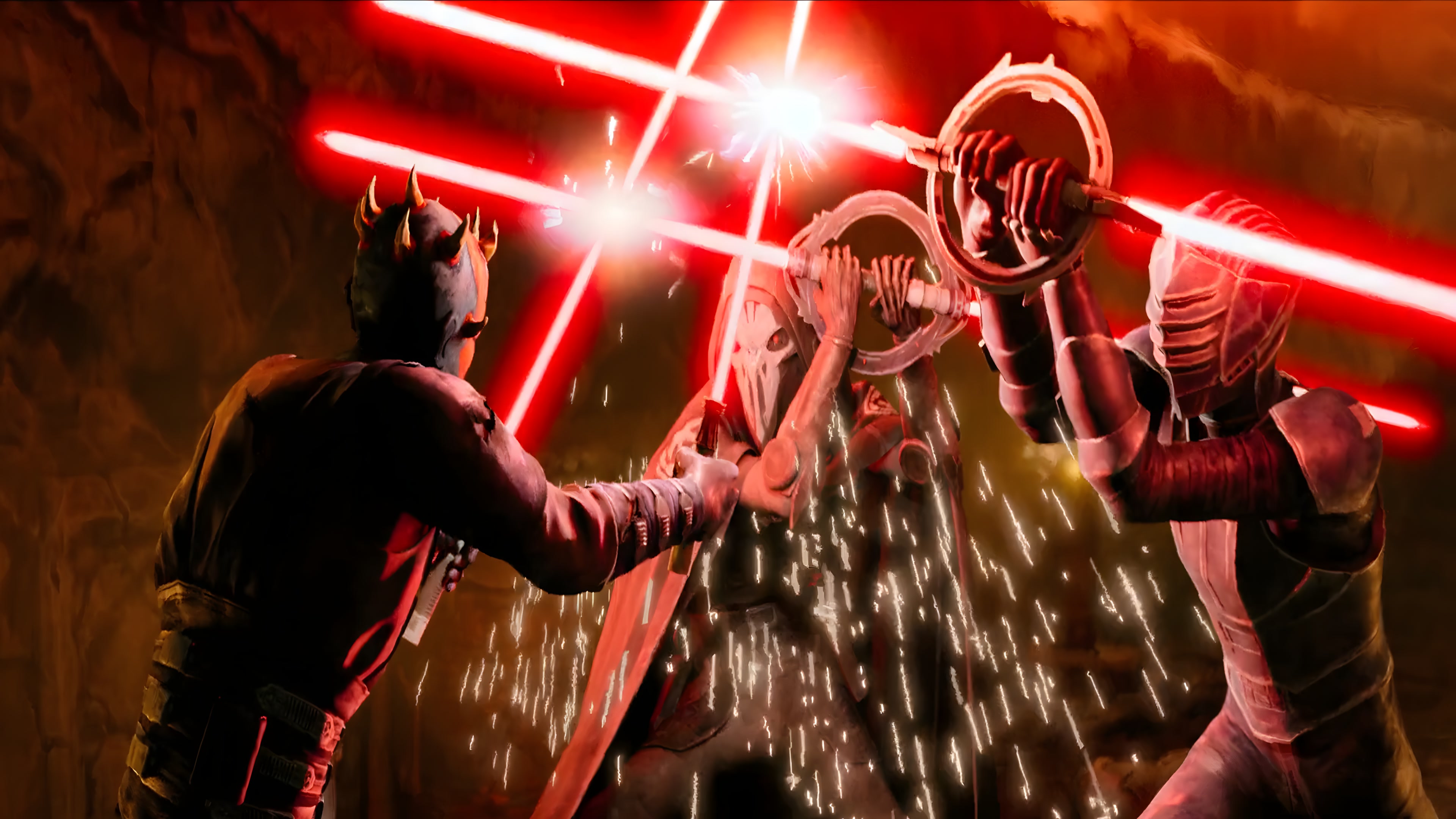
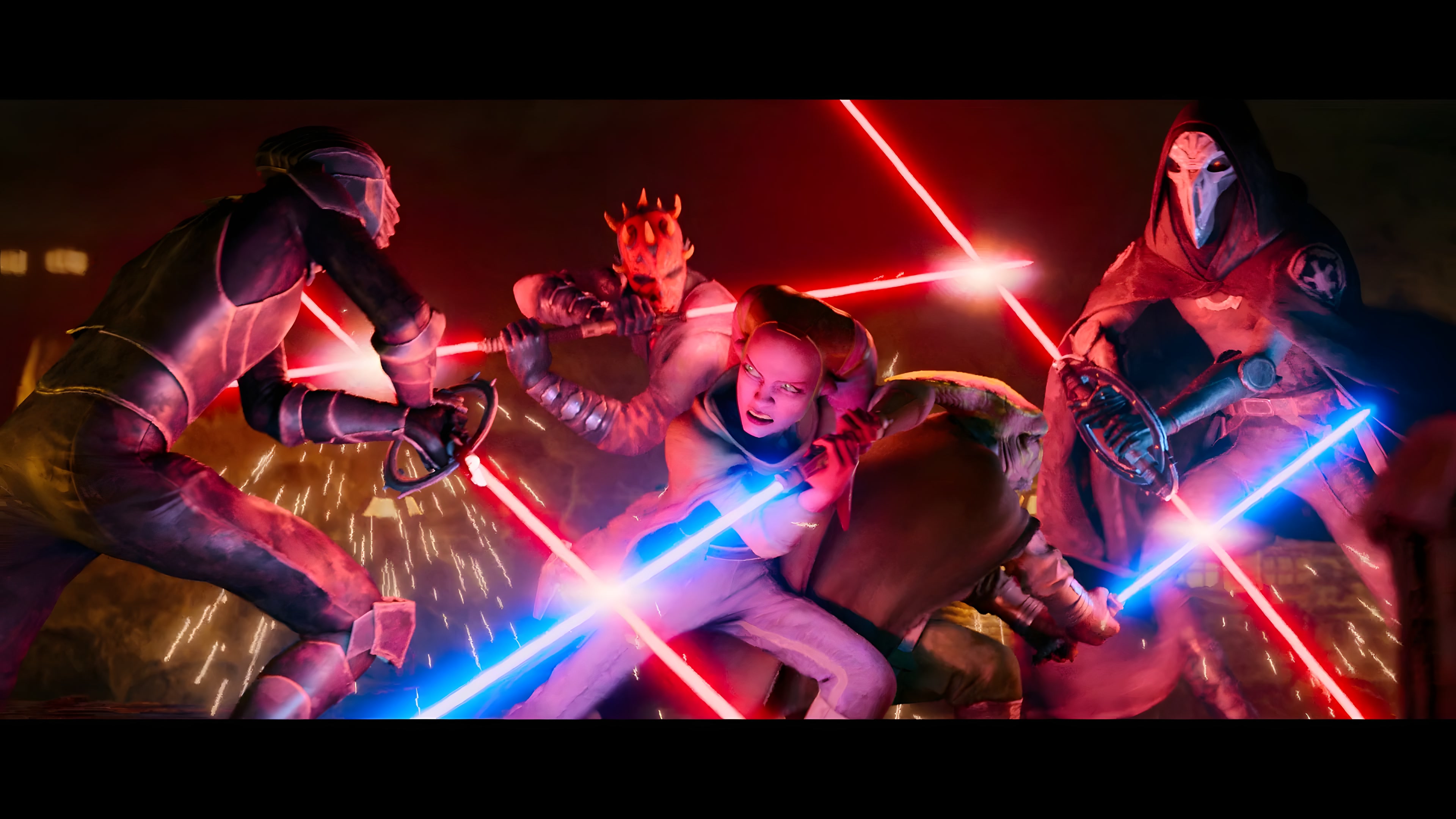
Episode 9 detailed the incredibly fragile "alliance of convenience" between Maul, the exiled Twi'lek Jedi Padawan Devon Izara (voiced by Gideon Adlon), the surviving Jedi Master Eeko-Dio Daki (voiced by Dennis Haysbert), and former Janix police captain Brander Lawson (voiced by Wagner Moura). To escape Janix, which was deeply besieged by an Imperial military blockade, this group of natural enemies—diametrically opposed in ideology and interests—were forced to unite against overwhelming waves of Imperial Stormtroopers and Jedi-hunting Inquisitors (including the Seventh Brother and the Eleventh Brother, Marrok).
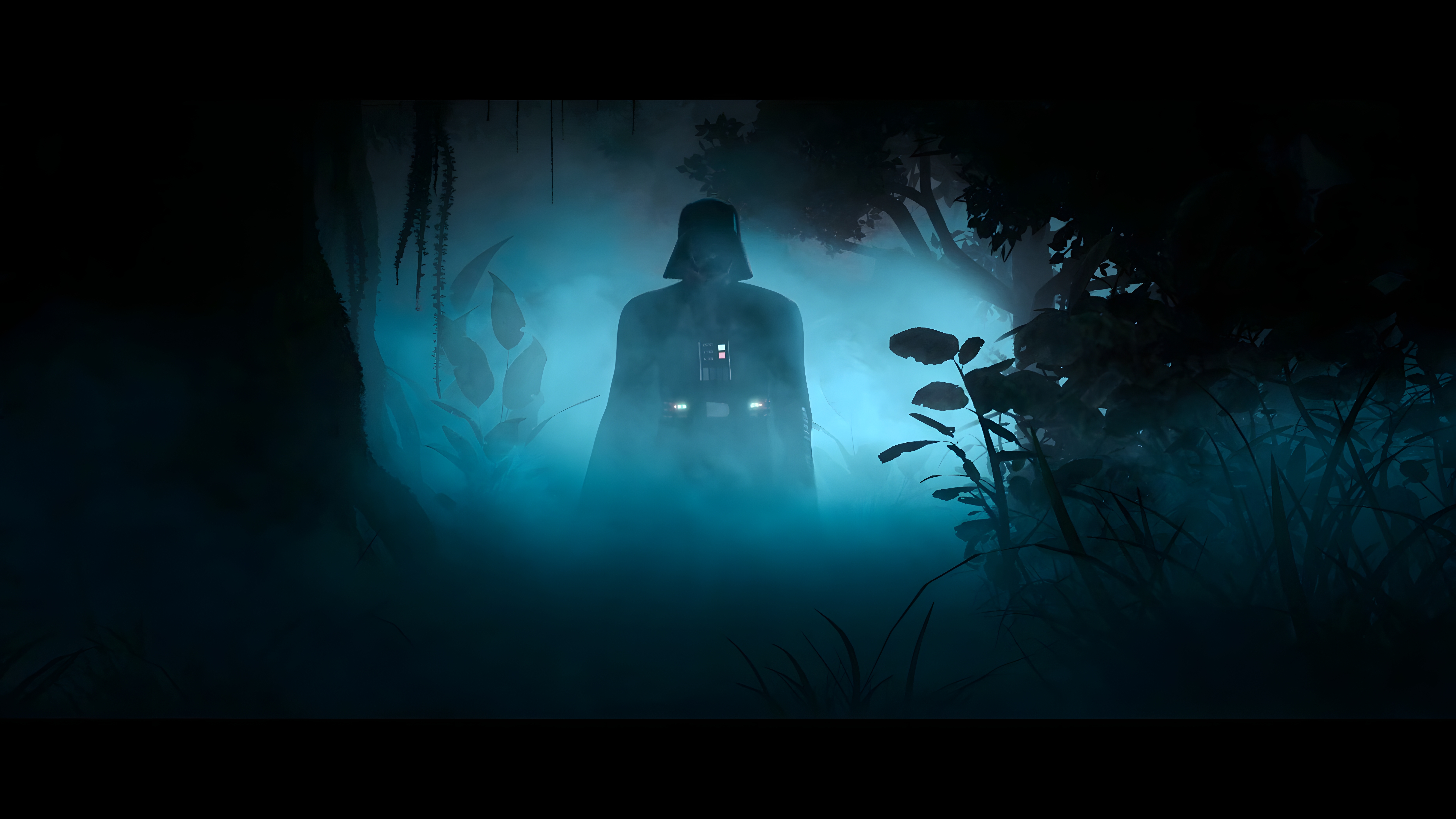
During this breakout, the creators utilized brilliant cinematic language to showcase extreme emotional tension and visual spectacles. The animation team reached new heights in choreographing group combat; for instance, a one-shot sequence of the Inquisitors ambushing out of a tunnel was widely praised by viewers on Reddit (r/television) for its exceptional cinematography. In terms of character interactions, Jedi Master Daki and Sith Lord Maul acted as the angel and devil on Devon's shoulders, frantically tugging at the young Padawan's foundational beliefs in the margins between life and death. However, this precarious balance was utterly shattered in Episode 10 with the terrifying arrival of Darth Vader.
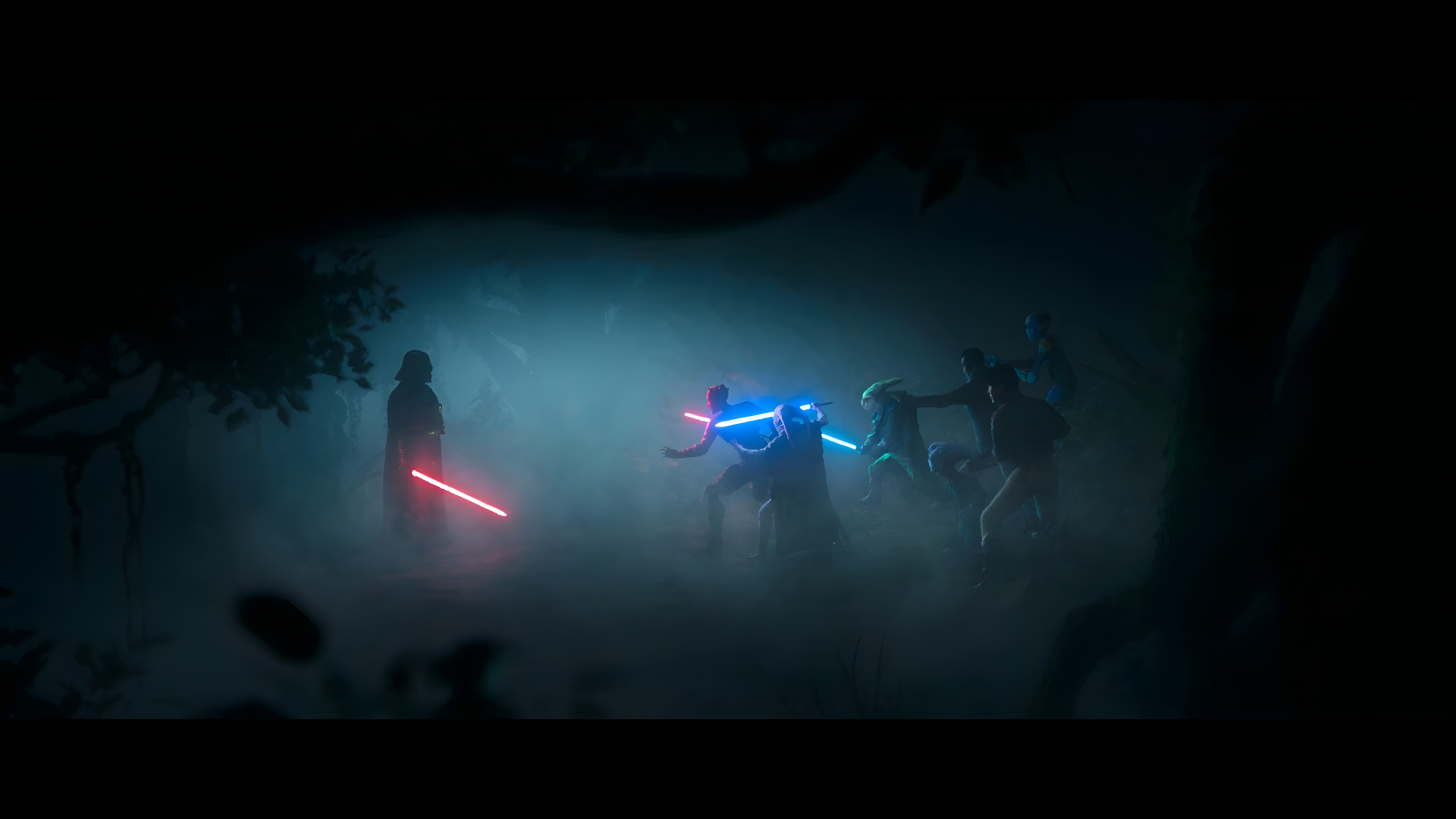
The sheer casualty rate of the finale is a rarity in Star Wars animation history, demonstrating the production team's commitment to cruel realism. Nearly every supporting character met a heroic or miserable end, a design that greatly amplified the nihilistic emptiness of Maul's ultimate victory:
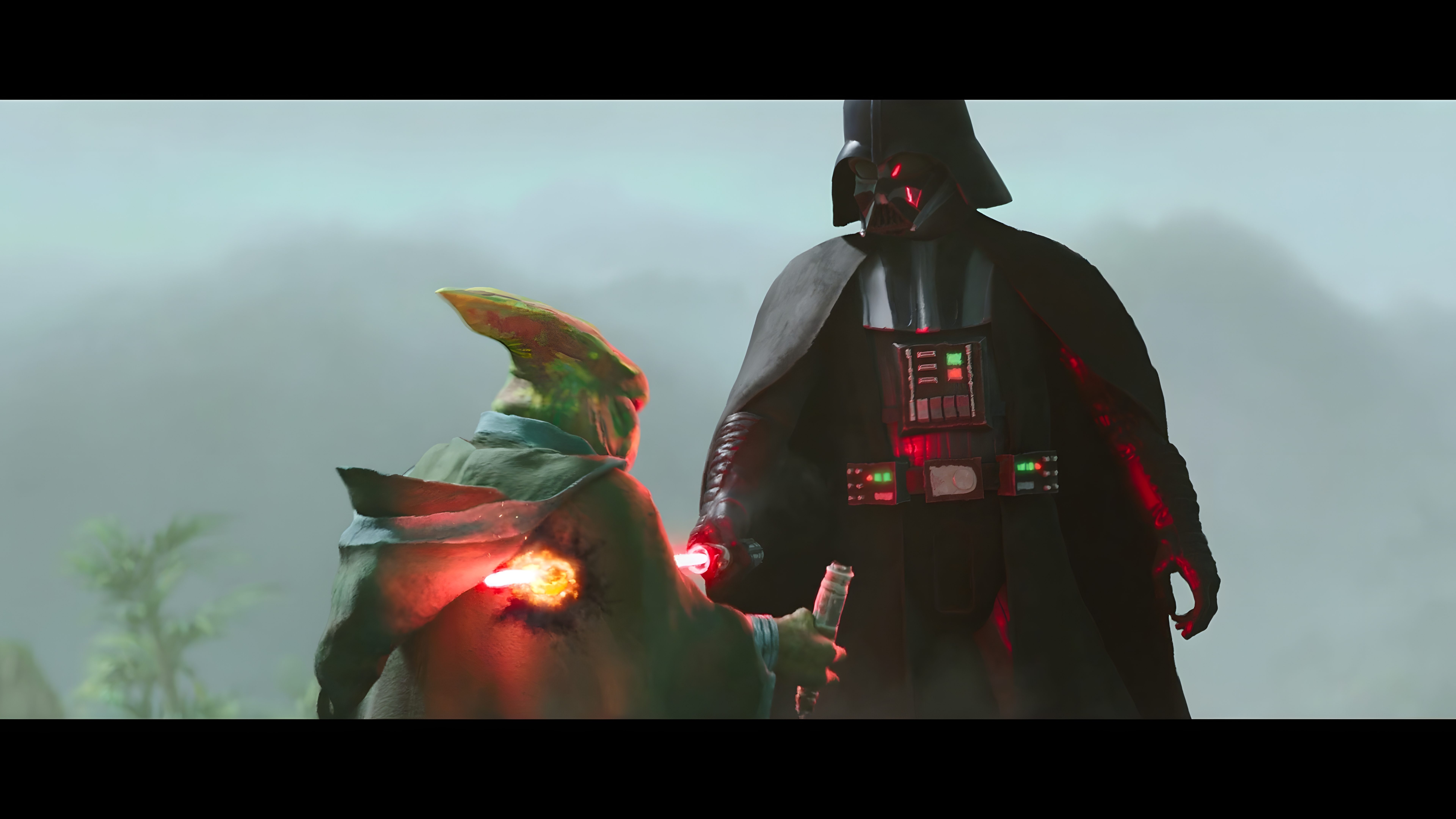
The most brutal moment of this slaughter was undoubtedly the fall of Master Daki. While attempting to fend off Darth Vader, Maul—seeking to sever Devon's final spiritual tie to the Jedi Order and secure his own escape—ruthlessly used the Force to push Daki directly into Vader's blade, resulting in the Jedi Master being struck down instantly. Critics noted that while this aligned with Maul's traditionally insidious nature, the animation's refined facial capture technology granted Maul a fleeting micro-expression of remorse, a contradiction that greatly fleshed out his depth. Additionally, the hardboiled detective Lawson sacrificed himself to cover the escape of his son Rylee, his droid partner Two-Boots, and crime boss Vario, facing a tsunami of Stormtroopers alone. Although he may still be alive according to the cinematic "no body, no death" rule, this scene, amplified by a tragic score and slow-motion rendering, pushed the show's tragic coloring to its peak.
A Sisyphean Song of Destiny: Darth Maul's Psychological Reconstruction and Narrative Subtext
If one strips away the visual spectacles of lightsaber duels and action set pieces, Shadow Lord Season 1 is fundamentally a profound psychological tragedy exploring "paranoia and futility." Renowned actor Freddie Prinze Jr. (who has voiced characters in multiple Star Wars animations) astutely compared Maul to the Greek mythological figure Sisyphus on social media. This observation accurately captures the pathological psychological model Maul exhibits throughout the streaming era.
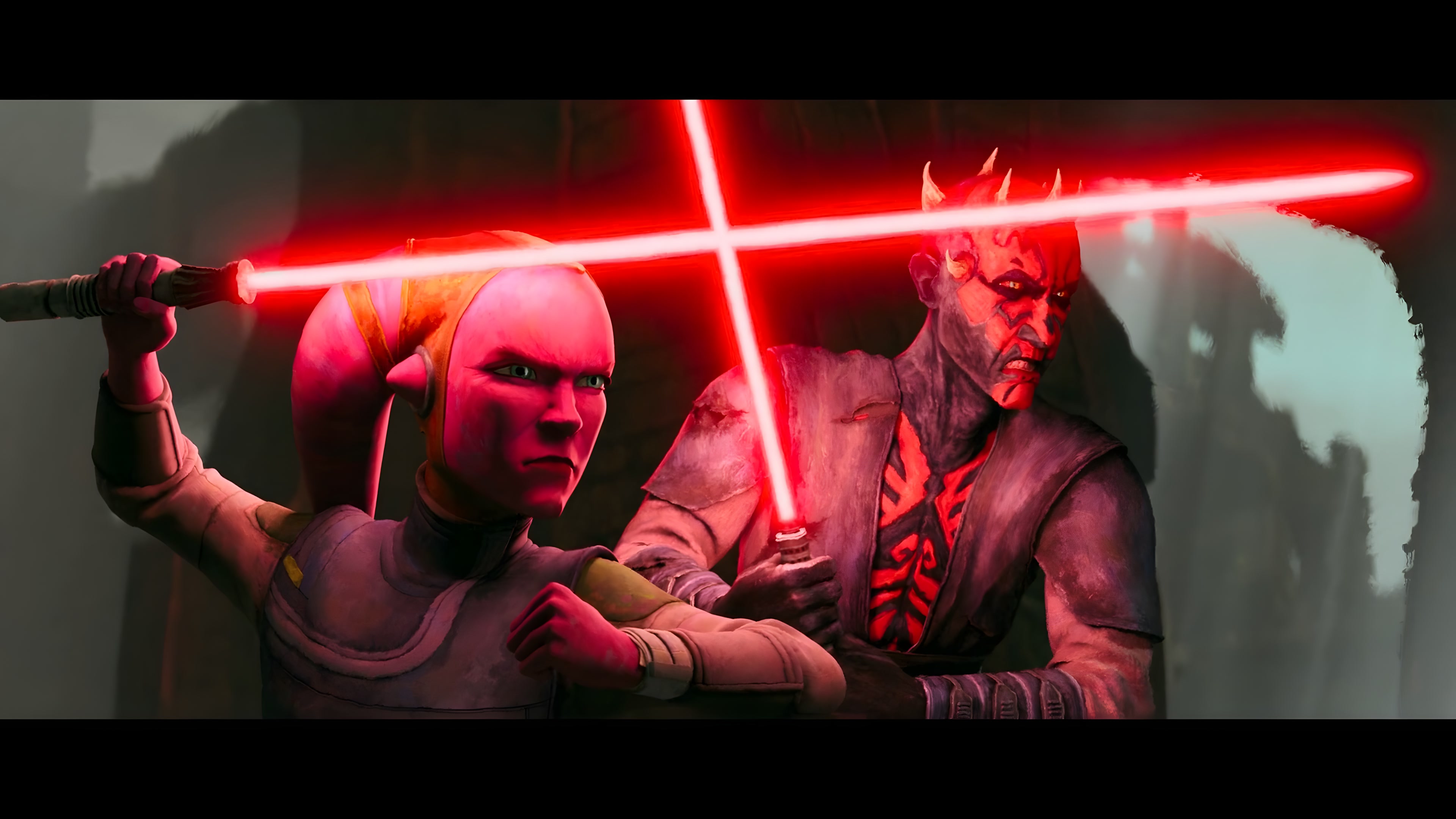
Over the course of ten episodes, Maul displays a highly self-destructive behavioral pattern. He established two core objectives at the series' outset: first, to regain control of the "Shadow Collective" that betrayed him and once again become the uncrowned king of the underworld; second, to find a highly potential Force-sensitive youth as a new apprentice to inherit his dark power and ultimately take revenge on his former master, Darth Sidious (Emperor Palpatine). To corrupt the young Jedi Padawan Devon, Maul spiraled into an absolute obsession with revenge and control.
Narrative logic and plot details heavily imply that Maul had countless opportunities to lead his loyal fleet safely away from the blockaded Janix. Yet, to force Devon's submission, he deliberately chose to remain in peril, continuously leveraging the lethal threat of the Empire to systematically dismantle Devon's psychological defenses. The direct consequence of this extreme, Machiavellian calculation was that while he did win an apprentice, he lost almost all his loyal subordinates who helped him rise, including his devoted lieutenant Rook Kast.
This modus operandi of "destroying all that is real around him for a nihilistic goal" forms a brilliantly ironic closed loop. Maul spent his entire life trying to break free from the rules of the Sith, particularly Sidious's control. Yet, his extreme disregard for life and his cold-blooded philosophy of viewing others purely as tools to achieve an end ultimately made him a perfect replica of Sidious. Just as Sidious seamlessly adapted and pivoted to Count Dooku and Anakin Skywalker after losing Maul, Maul operates on the exact same logic, replacing the pawns around him. He claims to have broken the shackles of the Sith, but in his spiritual core, he is securely imprisoned by Sith philosophy, trapped in an endless curse of gaining power only to lose everything over and over again.
The Collapse of Devon Izara's Psychological Defenses and the Mortal Perspective of the Supporting Cast
Contrasting this is the total collapse of the young Padawan Devon Izara's psychological defenses. In an exclusive interview with StarWars.com, voice actress Gideon Adlon provided a deep psychological interpretation of Devon's ultimate fall. Throughout Season 1, Devon fought desperately against Maul's manipulation. However, witnessing her father-figure mentor Daki ruthlessly killed by Darth Vader became the final straw that broke her sanity.
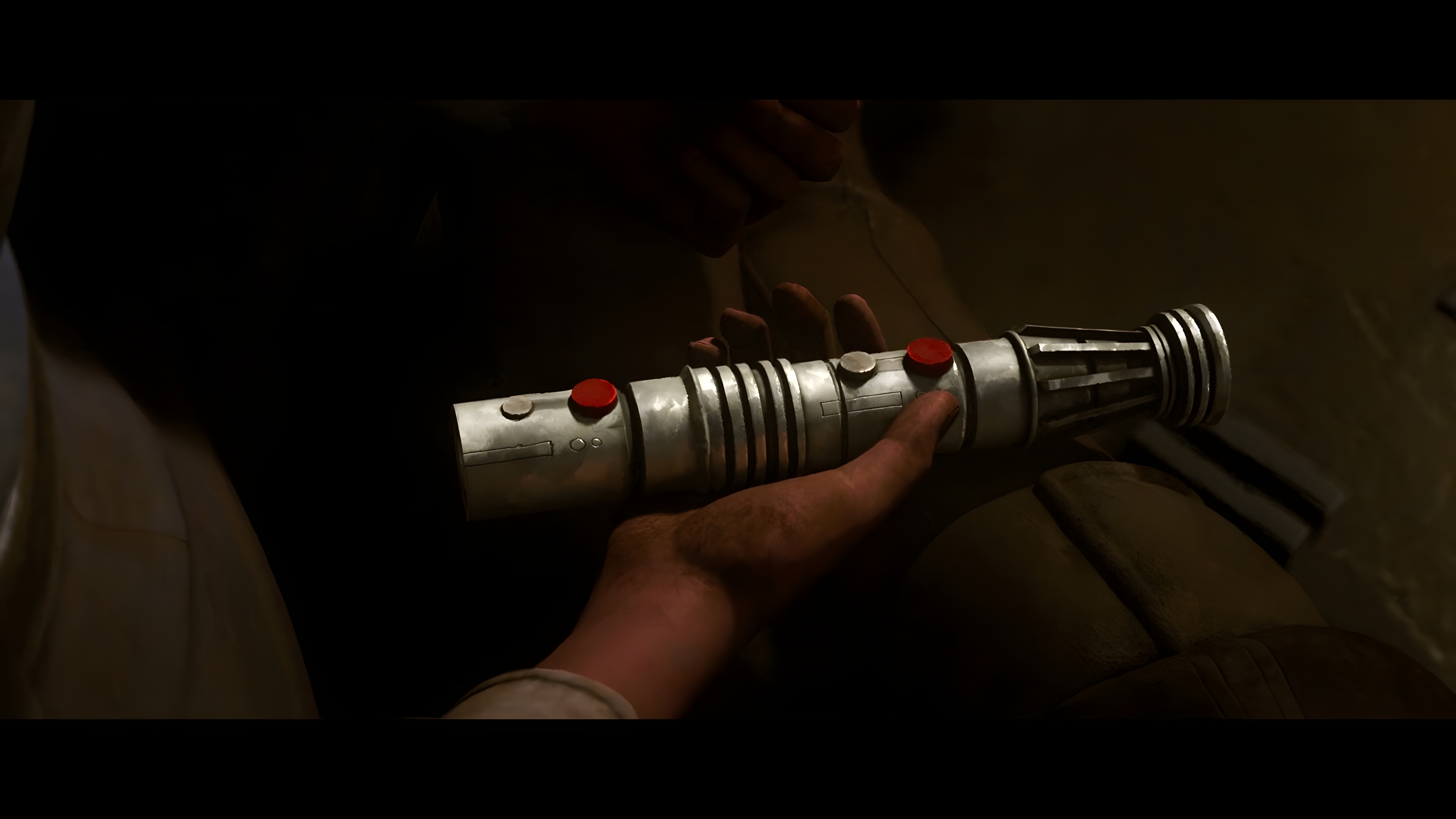
Adlon pointed out that this tragic event did not merely trigger a simple outburst of anger, but caused a subconscious "flips a switch" under extreme trauma. Intense grief and powerlessness completely altered Devon's personality structure, instinctively driving her to draw power from the dark side of the Force for survival and revenge. Even deeper psychologically, the sense of belonging Devon could never find within the orthodox Jedi Order was paradoxically projected onto Maul, essentially her abuser, as a twisted "father figure". In the finale's closing scene, having lost everything, a tearful Devon accepted the broken half of Maul's red double-bladed lightsaber. This action visually completed her sacrifice to the dark side and signaled her realization that in this cruel galaxy, following Maul had become her only "safest option".
Beyond exploring the fateful entanglements of Force users, the creators cleverly provided an essential perspective from a non-Force user (a civilian) through the eyes of the hardboiled detective Lawson. Initially harboring respect for the Jedi (Devon and Daki), Lawson's perspective ultimately grounds the narrative by showing how ordinary mortals struggle to survive in the crossfire of "gods fighting" after witnessing the endless tug-of-war over the Force and destiny between Maul and the Jedi. The mending of Lawson's relationship with his son Rylee, and his ultimate choice to sacrifice himself, not only demonstrated the greatness of ordinary people but formed a sharp moral contrast against Maul's willingness to sacrifice his subordinates for selfish desires. When the finale's camera pans from Rylee—who also lost a father but curls up in a closed-off state—to Devon gripping a red lightsaber, this contrast of different post-traumatic stress responses greatly elevated the literary quality and realistic pathos of the series.
Darth Vader as the Incarnation of Fear and the Hardcore "Power Scaling" Debate
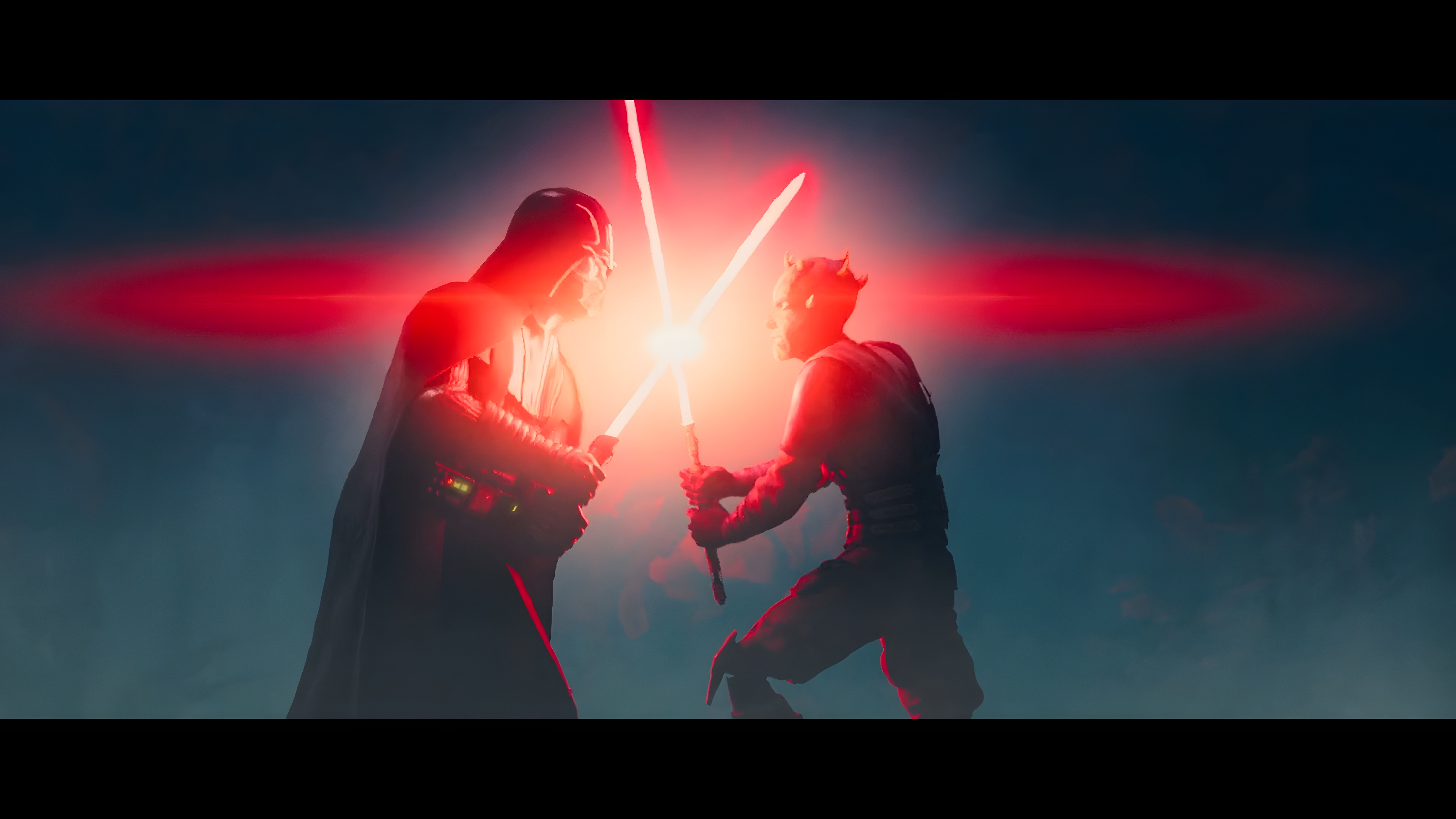
The core element of Episode 10 that sparked the most widespread discussion across the internet was undoubtedly the terrifying arrival of the Dark Lord of the Sith, Darth Vader. To a classic hypothetical question that had lingered in the Star Wars fandom for 27 years—"If Darth Maul and Darth Vader fought, who is stronger?"—this episode provided a suffocating and indisputable answer.
In past Star Wars spin-offs (such as Rogue One or Obi-Wan Kenobi), Vader often appeared accompanied by his signature heavy breathing and oppressive classic dialogue. However, the creative team made an extremely bold and restrained decision for the Shadow Lord finale: keeping Darth Vader absolutely dead silent during his entire appearance, without a single line of dialogue.
Critics and hardcore community users (like those on Reddit's television boards) highly praised this artistic choice, comparing him to iconic killers in classic horror cinema (such as Michael Myers in Halloween or Jason in Friday the 13th). At this stage, Vader is no longer a fallen Jedi struggling with his emotions; he has become the universe's "Entropy"—an unstoppable, indescribable force of inevitable decay and death. In the epic 3-on-1 lightsaber duel facing the frantic, complex multi-blade assaults of top-tier fighters Maul, Daki, and Devon, Vader comfortably countered them utilizing sheer power and an overwhelming Force barrier, wielding his red lightsaber with just one hand. According to detailed scene breakdowns, Vader's only "battle damage" during this high-intensity fight was a superficial scratch on his shoulder armor that had absolutely zero impact. This unconquerable suffocation not only pierced through the screen but even caused the traditionally arrogant and haughty Maul to exhibit unprecedented fear and trembling in the animation's detailed micro-expressions.
However, Vader's crushing display of strength subsequently triggered a fierce and prolonged academic debate regarding the Star Wars universe's "Power Scaling" on core fan platforms (such as r/StarWars and r/MaulShadowLord).
The focal point of the controversy lies in logical conflicts caused by lateral character comparisons: In this show, the powerful trio of Maul, Daki, and Devon not only act like a mantis trying to stop a chariot against Vader, but they also struggle considerably early on against two Imperial Inquisitors (especially the Eleventh Brother, Marrok). Yet, fans pointed out that in Tales of the Jedi and Rebels, both spearheaded by Dave Filoni, former Jedi Padawan Ahsoka Tano could effortlessly annihilate Inquisitors of the same rank. In the Season 2 finale of Rebels at the Malachor temple, she even fought Vader to a standstill and briefly cracked his mask.
Some fans used this as evidence to criticize the show's power scaling for having logical gaps, arguing that the production team unreasonably nerfed the top-tier oppressive capabilities Maul and Master Daki should inherently possess just to elevate Vader's intimidation factor. However, more hardcore Star Wars theorists rebutted this questioning through profound martial arts lineages and plot details, proposing a highly persuasive "Information Gap" theory :
First, the fundamental reason Ahsoka could contend with Vader is that she was the direct apprentice raised by Anakin Skywalker (Vader's former self). Their lightsaber forms (like opening stances and defensive logic) share the same origin, and Tales of the Jedi showed Anakin putting Ahsoka through extremely rigorous, even brutal, combat training. This gave Ahsoka intimate knowledge of Vader's attack patterns. Just as Obi-Wan could defeat Anakin, the extreme familiarity and information gap compensated for the massive chasm in absolute Force power.
Conversely, in Maul's camp, neither Maul nor Daki knew anything about Vader's new swordplay, which fused heavy mechanical strength with ultimate dark side Force. In Maul's cognitive system, he was completely unaware that Sidious had recruited such a terrifying new apprentice after Count Dooku. This crushing defeat is crucial to Maul's character arc: it thoroughly shattered his illusion that he could single-handedly fight the Empire, abruptly awakening him to the immense power his former master Darth Sidious now wielded. This directly prompted his strategic pivot to abandon frontal assaults in favor of hiding behind the scenes to build a subterranean criminal empire. At this level, the power scaling is actually a masterful stroke serving the narrative logic.
Voice Acting, Cross-Media Easter Eggs, and the Ultimate Tribute to Sam Witwer
The immense artistic achievement of Shadow Lord owes a great deal to the soul of Darth Maul—his dedicated voice actor, Sam Witwer. Not only did he provide an impeccable vocal performance, but he was also brought on as a story consultant as early as April 2025 (during the project's announcement phase), getting deeply involved in designing Maul's psychological motives and integrating the lore. His deep collaboration with producer Dave Filoni ensured that Maul's character evolution perfectly bridged the gaps between The Clone Wars and Rebels.
In the finale, the creative team carefully planted numerous Easter eggs that ignited a frenzy among hardcore gaming fans, all pointing back to another of Witwer's representative Star Wars roles: the secret apprentice "Starkiller" (Galen Marek) from the classic 2008 LucasArts action game Star Wars: The Force Unleashed, for which Witwer provided both voice and facial capture. This highly meta-narrative tribute became another major engine driving fanatical analysis of Episodes 9 and 10 within core circles:
Perfect Replication of Visual Postures: In Episode 9, while fighting the Imperial walker (AT-ST) and the Inquisitors, Maul strikes a signature pose in several critical frames—holding both lightsabers in a Double Reverse Grip behind his back. This is Starkiller's most iconic idle and combat stance from the game, which was quickly screenshotted and went viral on Reddit.
Authentic Sound Design: Exquisitely meticulous sound design further confirmed this homage. Fans keenly noticed that the unique sound effects used when Maul unleashes a Force Push and performs a dodge dash were directly pulled by the production team from the original underlying audio assets of The Force Unleashed, delivering a powerful auditory wave of nostalgia.
The Echo of Proxy the Droid: The droid duo voiced by Richard Ayoade and David Collins was a highlight of the season. When the spy droid Spybot—described as an "amoral Chopper"—dies, its final line, "Master...r..r," glitches with vocal trembling and rhythmic delays identical to the classic droid Proxy being impaled by Vader in The Force Unleashed (and coincidentally, Spybot's voice actor David Collins was also the voice of Proxy back in the day).
Recreation of Execution Animations: The storyboard blocking and action logic of Maul dismantling the AT-ST walker highly mirrored Starkiller's QTE (Quick Time Event) vehicle takedown animations from the first The Force Unleashed game, demonstrating astonishing cross-media synchronization.
These interwoven cross-media details not only reflect the deep respect and meticulous mining of the Star Wars Expanded Universe (Legends) by Dave Filoni's creative team, but they also perfectly showcase how Sam Witwer, as a "walking Star Wars encyclopedia," deeply nourishes the lifeblood of the franchise. From voicing Starkiller to voicing Maul and Sidious, Witwer's status in the Star Wars villain ecosystem is now truly irreplaceable.
The Rise of the Galactic Underworld and the Future Blueprint of the IP Matrix
Episodes 9 and 10 were by no means a simple wrap-up to the first season's story; they were a critical suture into the canon Star Wars timeline, with far-reaching impacts that will radiate across multiple future spin-offs.
In Episode 9, Maul conducts a crucial parley and exchange of interests over the dark web with Dryden Vos (voiced in this series by Scott Whyte, taking over from Paul Bettany in the film), a high-ranking boss of the "Crimson Dawn". Facing relentless pursuit by Vader and the desperate hopelessness of breaking the siege, it is the ship sent by Vos that pulls the survivors off the collapsing planet of Janix at the last minute.
This pivotal plot setting not only fulfills Maul's vow from Episode 1 to "rebuild the crime syndicate," but directly lays the narrative groundwork for the shocking final scene of the theatrical film Solo: A Star Wars Story—revealing Maul as the true mastermind behind Crimson Dawn. Industry analysts acutely pointed out that, following the brutal tone established in Season 1, future iterations of Shadow Lord will not merely be traditional Force-duel shows, but will gradually evolve toward a Star Wars version of The Sopranos or The Wire, deeply exploring drug smuggling, gang warfare, and power games in the galactic underworld.
Furthermore, the open-ended conclusion of Devon accepting Maul's training sparked feverish speculation among media and core fans regarding George Lucas's abandoned early drafts for the sequel trilogy. When Lucas originally conceived Episodes VII through IX, his central antagonist was Darth Maul, who had become a galactic crime lord post-Empire, alongside his inseparable Twi'lek female apprentice—Darth Talon.
Not only is Devon also a Twi'lek, but her trajectory of embracing the dark side in despair and being taken as Maul's apprentice aligns highly with Talon's early conceptualization. When the gaming outlet GamesRadar pressed supervising director Brad Rau on this highly popular theory, he adopted a very suggestive, evasive stance: "We can't give away too much. We have heard a lot of the fan theories and speculations, and we are fascinated by them. We'll just put it at that, leave it at that." This ambiguous official statement largely corroborates that the creative team is executing a grand plan: extracting the essence of old, non-canon scrapped concepts and reweaving them into the current canon in a much more logical manner. Considering that in the timeline established by Rebels, Maul once again becomes an exiled loner searching everywhere for a new apprentice (like trying to seduce Ezra Bridger), Devon's future destiny will most likely end in a tragically self-destructive manner. This unresolved fate provides a rich foundation of dramatic tension and suspense for the officially renewed Season 2. As voice actor Sam Witwer revealed in interviews, because the project has been in parallel development for a while, fans "won't have to wait too long" to witness the continuation of this dark epic.
Industry Insights: The Star Wars Content Methodology in the Streaming Era
Synthesizing the comprehensive depth analysis spanning viewership data, audience psychology, narrative deconstruction, and technical details, the unprecedented success of Star Wars: Maul – Shadow Lord Season 1—particularly its finale—provides highly valuable methodological insights for the film and television industry, especially regarding the streaming management of massive classic IPs:
First, the moral downgrading of the protagonist and realistic reconstruction. In an era where superhero and traditional Jedi narratives are becoming homogenized, audiences have developed aesthetic fatigue toward absolutely bright, heroic storytelling. Centering a story around an out-and-out villain—without employing cliché "whitewashing" tropes to justify his sins, but instead using him to expose the universe's far grander, systemic darkness (such as the absolute totalitarianism and cruel oppression represented by Darth Vader and the Galactic Empire)—creates a pulpy, grim core that constitutes the show's strongest appeal to adult audiences.
Second, highly restrained nostalgia consumption. At a time when IP spin-offs easily devolve into fan-service clip shows, Darth Vader's arrival was shocking precisely because he was severely hidden throughout the season, descending only at the final moment like an irresistible natural disaster. The creators did not have him spout classic lines endlessly, but instead rebuilt the mythos of the character through clean action choreography and absolute visual power dominance. Tributes to older games like The Force Unleashed were also cleverly blended into the underlying sound design and micro-movements, rather than being forced in as gimmicks to drive the main plot. This subtle, "moistening-things-silently" approach to Easter eggs is a high-level expression that respects fans' intelligence.
Third, the virtuous cycle between the animation industry and streaming release windows. For a long time, animation has often been viewed as a mere appendage to live-action film and television. However, compared to live-action series, the animation industry possesses greater imaginative narrative freedom and relatively superior cost-control advantages. The excellent dynamic camera blocking in Shadow Lord (such as the complex 3v1 lightsaber duel) once again proved that animation has a natural advantage over live-action in depicting Force mysticism and high-intensity lightsaber combat. At the same time, due to the extremely high word-of-mouth and viewership conversion rates, Disney has unsurprisingly fast-tracked the development of Season 2 at lightspeed. Compared to the two-to-three-year production gaps typical of live-action Star Wars shows, an efficient animation pipeline (such as the highly synergistic collaboration between CGCG and Lucasfilm's internal team on this show) provides streaming platforms with a stable, continuous, and high-quality anchor for core user retention.
The conclusion of the Darth Maul: Shadow Lord Season 1 finale not only imbues the classic character of Darth Maul—spanning over twenty years—with entirely new vitality, but it also powerfully declares that the Dave Filoni-led new era of Star Wars animation has completely shed its subordinate status as mere "supplementary material." With its grim, mature narrative stance and profound tragic aesthetics, it has officially stepped to the absolute forefront of contemporary streaming sci-fi epics.