
 EN
EN

Lightsaber blade Classification by Optical Material
In lightsaber manufacturing, the light-guiding characteristics and visual texture of the blade can be significantly altered by adding various optical agents to the Polycarbonate (PC) raw material or by applying surface treatments. Based on optical performance, blades are categorized into five main types:
- Light Diffusion Blade
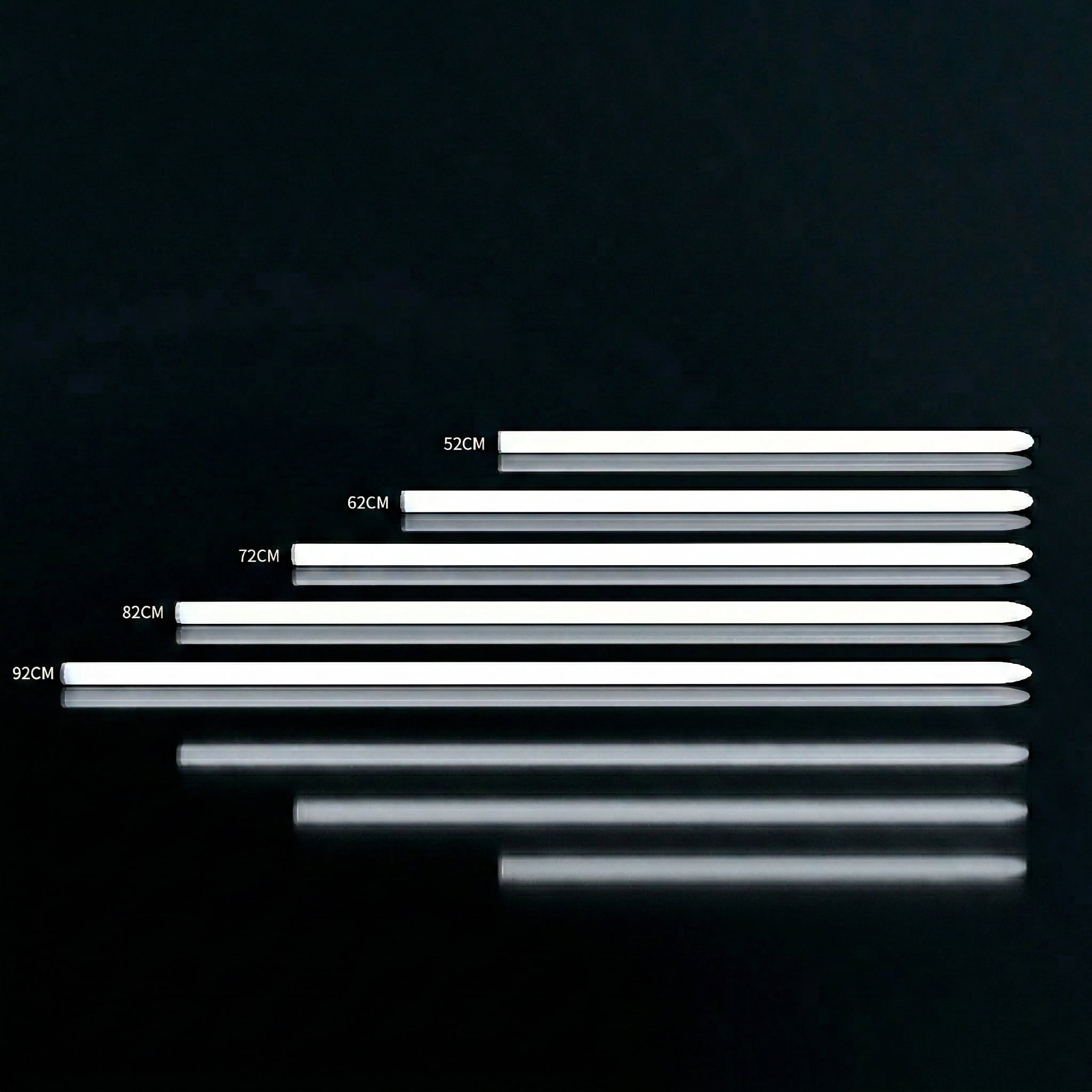
Process Principle: Specific ratios of Light Diffusion Agents or micron-sized diffusion powders are added during the PC extrusion or injection molding process. This gives the tube an Opalescent (Milky White) semi-translucent appearance.
Physical Logic: The diffusion agents utilize Mie Scattering principles to effectively refract and scatter light passing through the tube walls.
Uniformity: It eliminates harsh hotspots from internal light sources (whether baselit or pixel LEDs), creating a uniform, neon-like glow along the entire blade.
Brightness Enhancement: By scattering light that might otherwise escape laterally into the viewer's line of sight, it significantly increases the Perceived Brightness of the blade.
Applicability: Compatible with all saber types (Pixel and Baselit); this is the current industry standard configuration.
- Colored / Day Blade
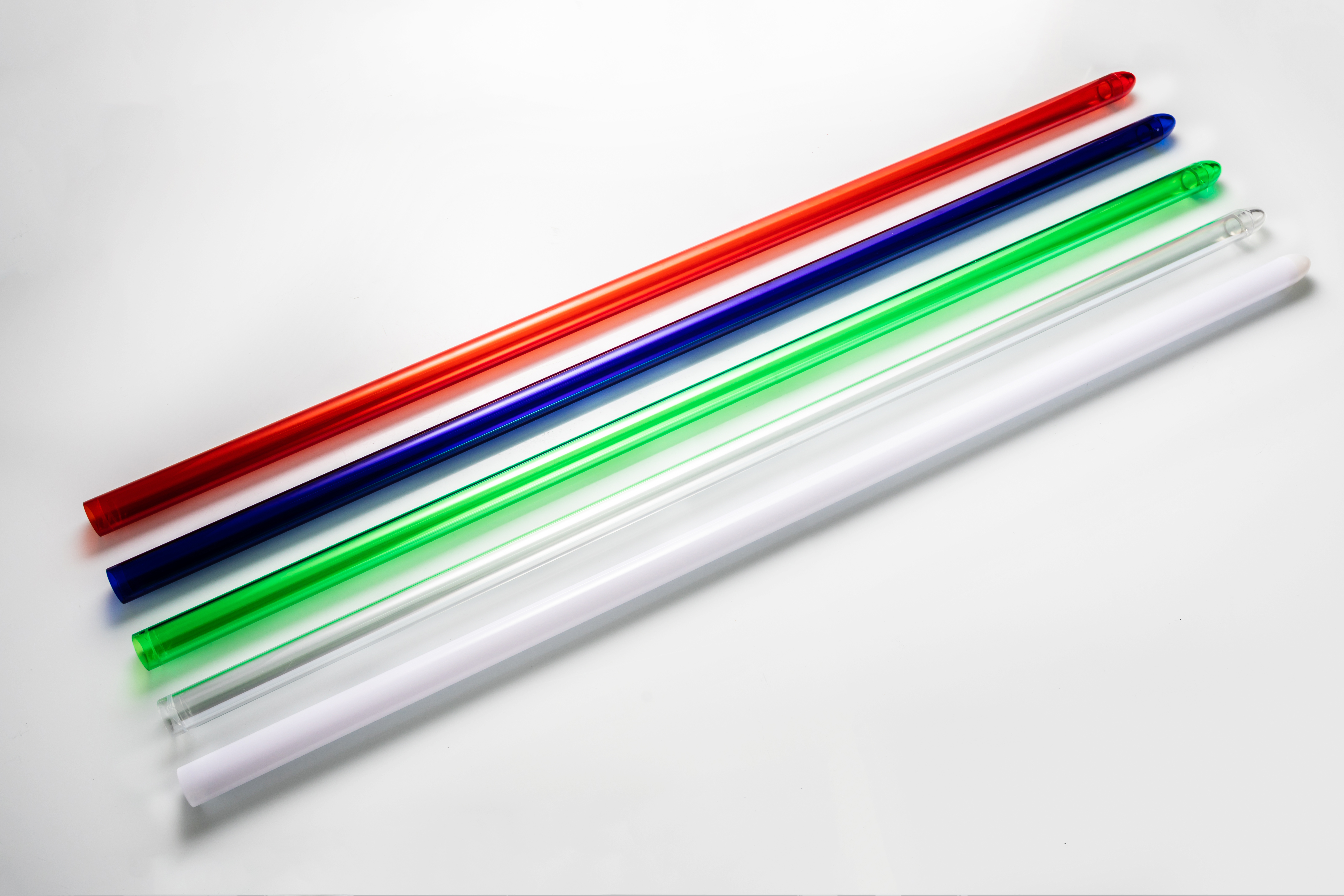
Process Principle: High concentrations of Industrial Pigments are pre-mixed into the raw PC material. Theoretically, any color (Red, Blue, Green, Purple, Black, etc.) can be produced.
Daytime Aesthetics: While standard white tubes look like plastic when off, colored blades retain distinct vivid colors in daylight or bright environments (even when unlit), simulating a physical beam. Hence, they are termed "Day Blades."
Optical Filter Logic:
When lit, the colored wall acts as an Optical Filter. It is recommended to match the light source color with the tube color (e.g., Red Light + Red Tube) for maximum saturation. Mismatched colors (e.g., Red Light + Green Tube) result in significant brightness loss due to subtractive color mixing.
Applicability: Compatible with Pixel and Baselit. Ideal for users seeking daytime display impact and unique nighttime color depth.
- Transparent / Clear Blade
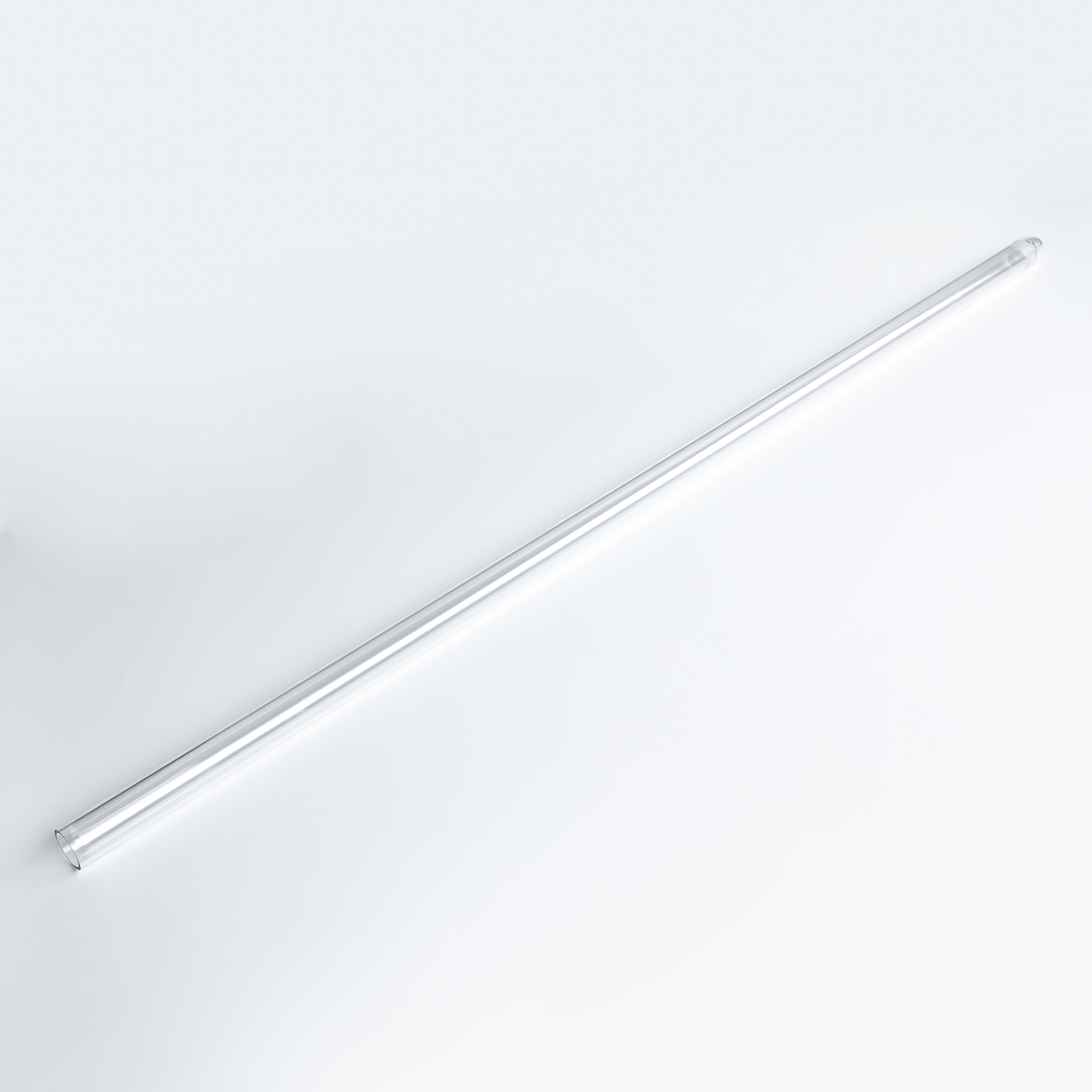
Process Principle: Manufactured using Virgin Optical Grade Polycarbonate without added pigments or diffusers, offering extremely high Light Transmission, resembling glass or crystal.
Visual Characteristics:
Pristine Texture: The glow is transparent, sharp, and has clearly defined edges.
Internal Visibility: Due to the lack of haze, internal components like diffusion film (for Baselit) or LED strips (for Pixel) remain partially visible.
Applicability: Compatible with Pixel and Baselit. Usage depends on personal aesthetic preference, often used where internal mechanics need to be shown or extreme clarity is desired.
- Photon / Fluorescent Blade
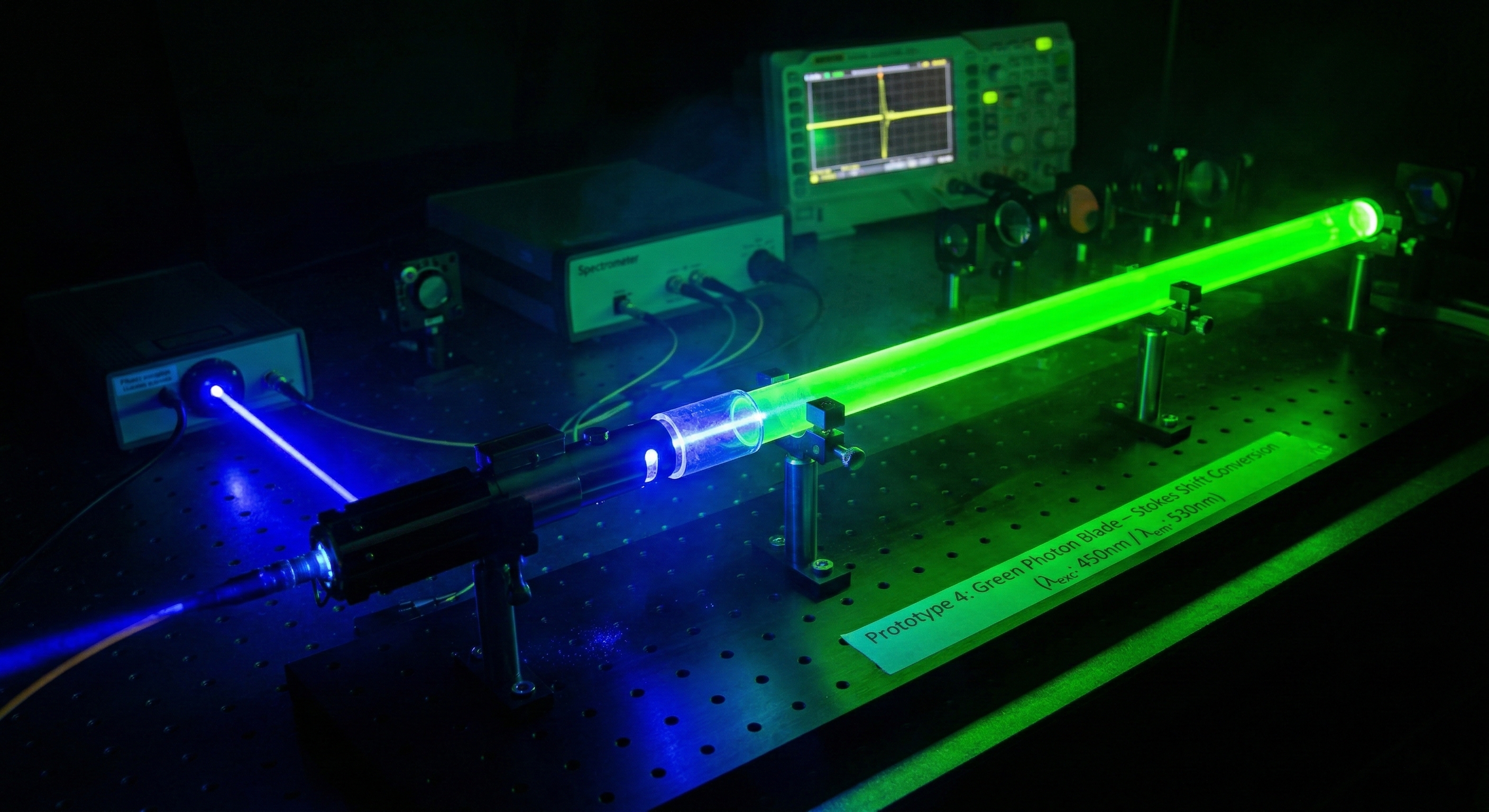
Process Principle: Specialized Photoluminescent Phosphors are doped into the PC tube. The most classic example is the "Green Photon" tube.
Physical Logic: Stokes Shift
This blade acts not just as a light guide but as a Wavelength Converter. It absorbs shorter-wavelength, high-energy light (such as Blue or UV) and re-emits it as longer-wavelength light (such as ultra-bright Green fluorescence).
Gain Effect: When a Blue light source drives a Green Photon tube, the blade's brightness often exceeds the source itself, creating an "over-saturated" radioactive glow with immense visual impact.
Applicability: Compatible with Pixel and Baselit. Highly favored by users seeking maximum brightness and a unique sci-fi texture.
- Graphic / Patterned Blade
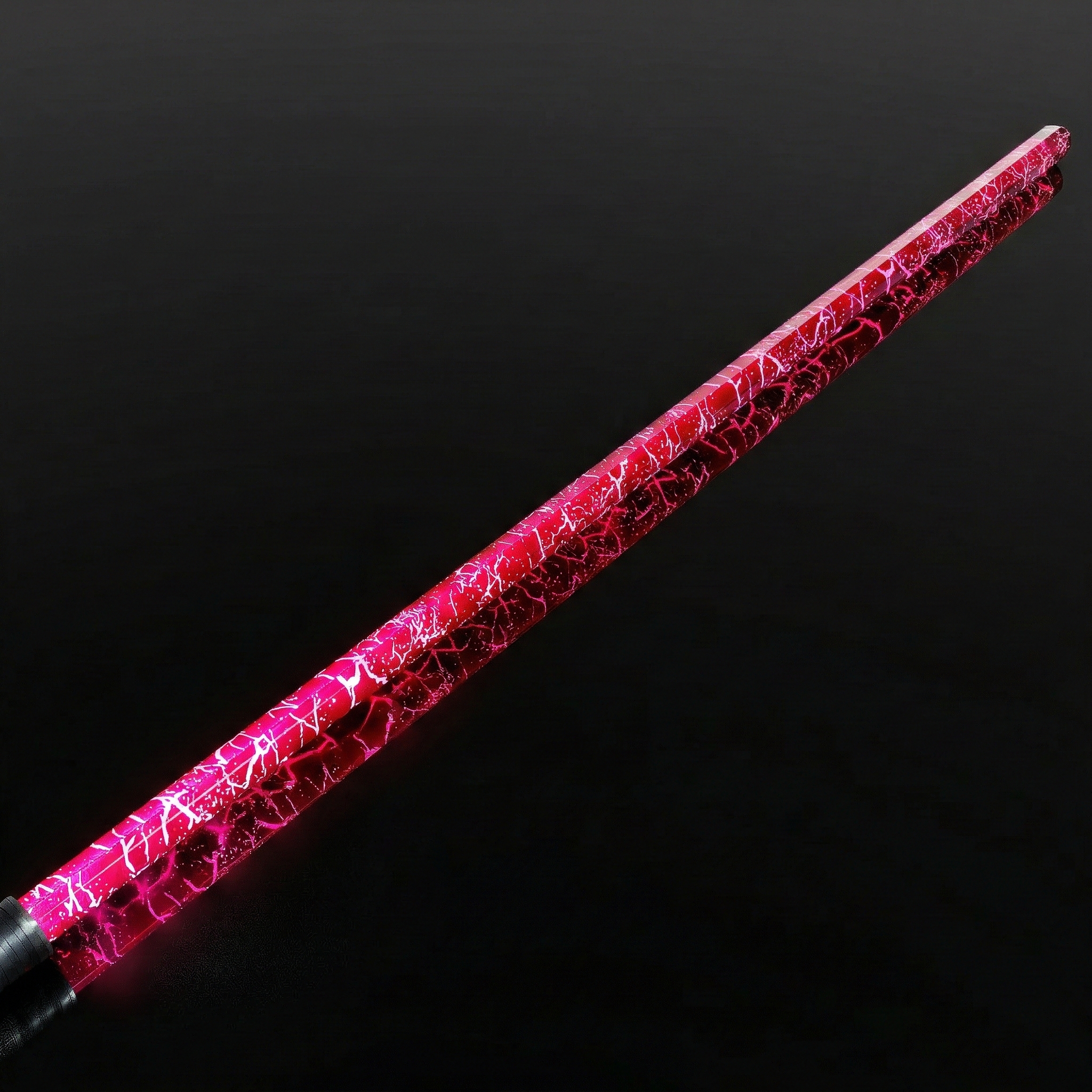
Process Principle: The PC tube surface undergoes precision spray painting combined with masking techniques to create patterns such as lightning, flames, circuitry, or runes.
Surface Engineering: To prevent paint chipping during dueling, the surface must undergo industrial UV Curable Coating. This hardened layer protects the graphics and enhances abrasion resistance.
Visual Logic: Creates High Contrast between the opaque painted sections and the translucent PC body. When lit, light escapes only through the patterned gaps, producing an aggressive and highly personalized visual effect.
Cost & Positioning: Due to complex manual masking, multiple spraying steps, and curing processes, the manufacturing cost is significantly higher than standard blades, positioning it as a high-end custom product.
Applicability: Compatible with Pixel and Baselit.