 EN
EN

The Theoretical Physics of a Lightsaber: Plasma, Magnetic Fields, and Thermal Dynamics
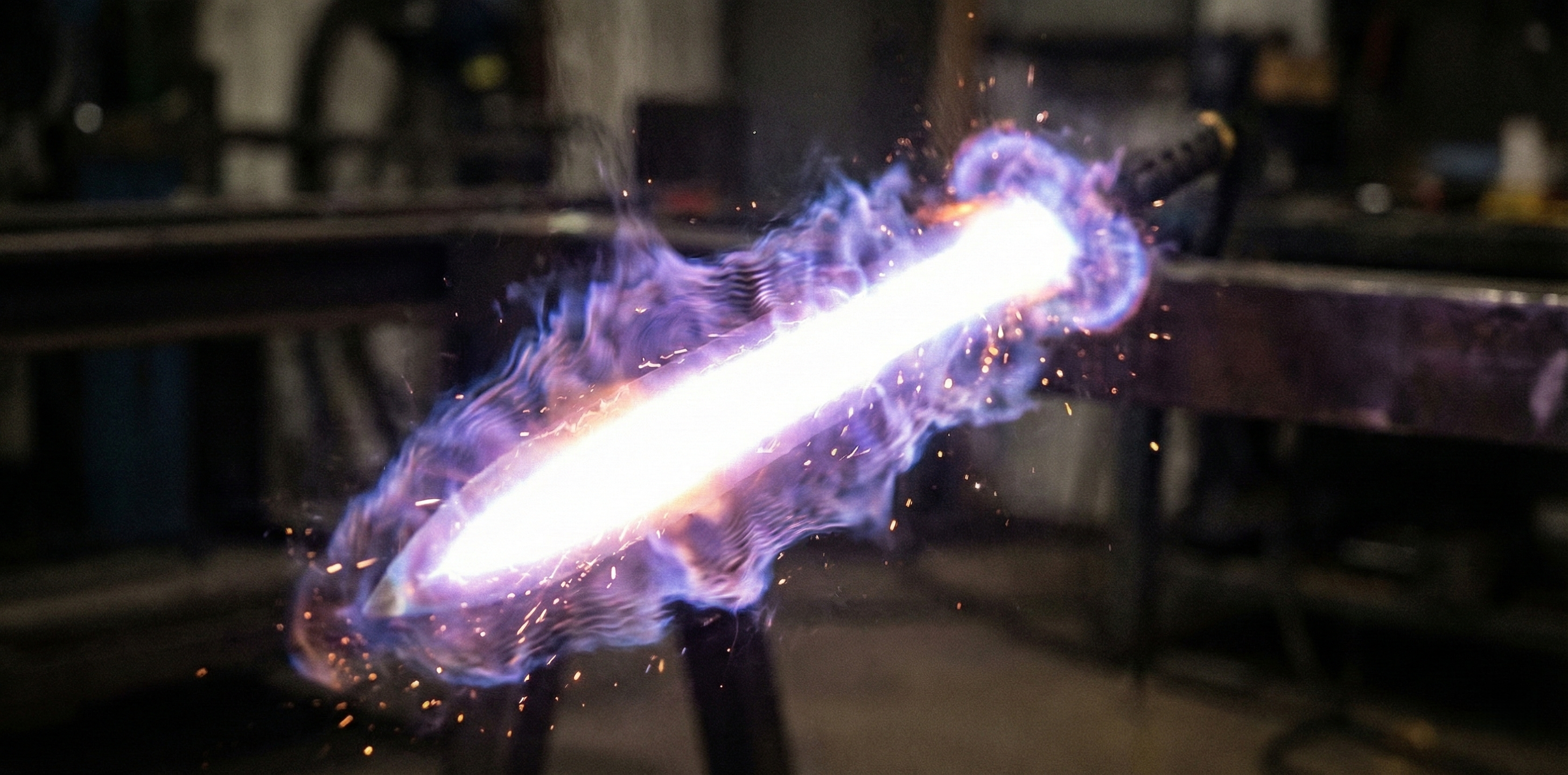
To move from "replica" to "reality," we must address the fundamental physics required to create the weapon described in the films: a blade of plasma that is solid, contained, capable of melting metal, and terminates abruptly. This section performs the necessary derivations to prove the impossibility of such a device under current physical laws.
The Energy Density Problem: The Gigawatt Calculation
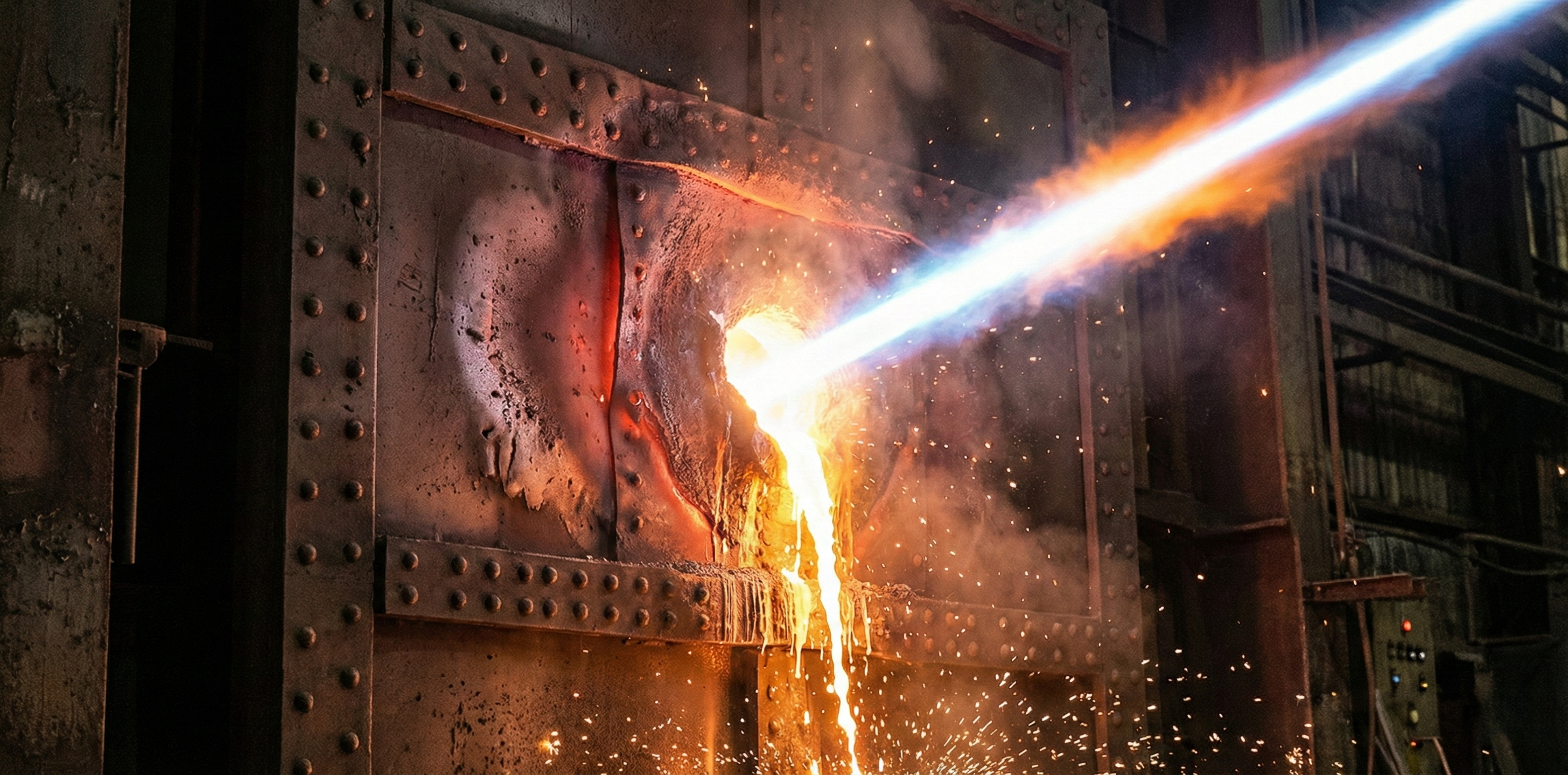
In The Phantom Menace, Qui-Gon Jinn inserts his lightsaber into a blast door and melts a hole roughly 1 meter in diameter and 10cm thick (estimated volume) in a matter of seconds. We can calculate the power required for this feat.
Material Assumptions : We assume the door is made of steel (Iron). Density (ρ) = 7874 kg/m³. Melting point = 1538°C. Specific heat (c) = 450 J/(kg·K). Latent heat of fusion (Lf) = 272,000 J/kg.
Mass Calculation :
Volume V = πr²h≈ π(0.5)²(0.1) ≈ 0.078m³
Mass m = ρV≈7874*0.078≈614KG
Energy Calculation : The energy (Q) required to heat the steel from room temperature (20°C) to melting point and then melt it is:
-
Power Output : If the melting takes approximately 3 seconds (as seen in the "fast" cut) or 1 minute (slow burn), the power P = Q/t.
-
At t = 3s: P ≈ 195 MW.
-
Some analyses suggest the door is much denser (Doonium), pushing requirements into the Gigawatt (GW) range.
-
-
The Battery Problem : A standard 18650 Li-ion battery stores about 10-12 Wh (36,000 - 43,000 J). To supply 587 MJ, one would need roughly 13,000 to 16,000 batteries. This physical volume is impossible to fit in a hilt. The fiction relies on "Kyber crystals" acting as zero-point energy modules, which have no real-world equivalent.
Plasma Containment: The Magnetic Bottle
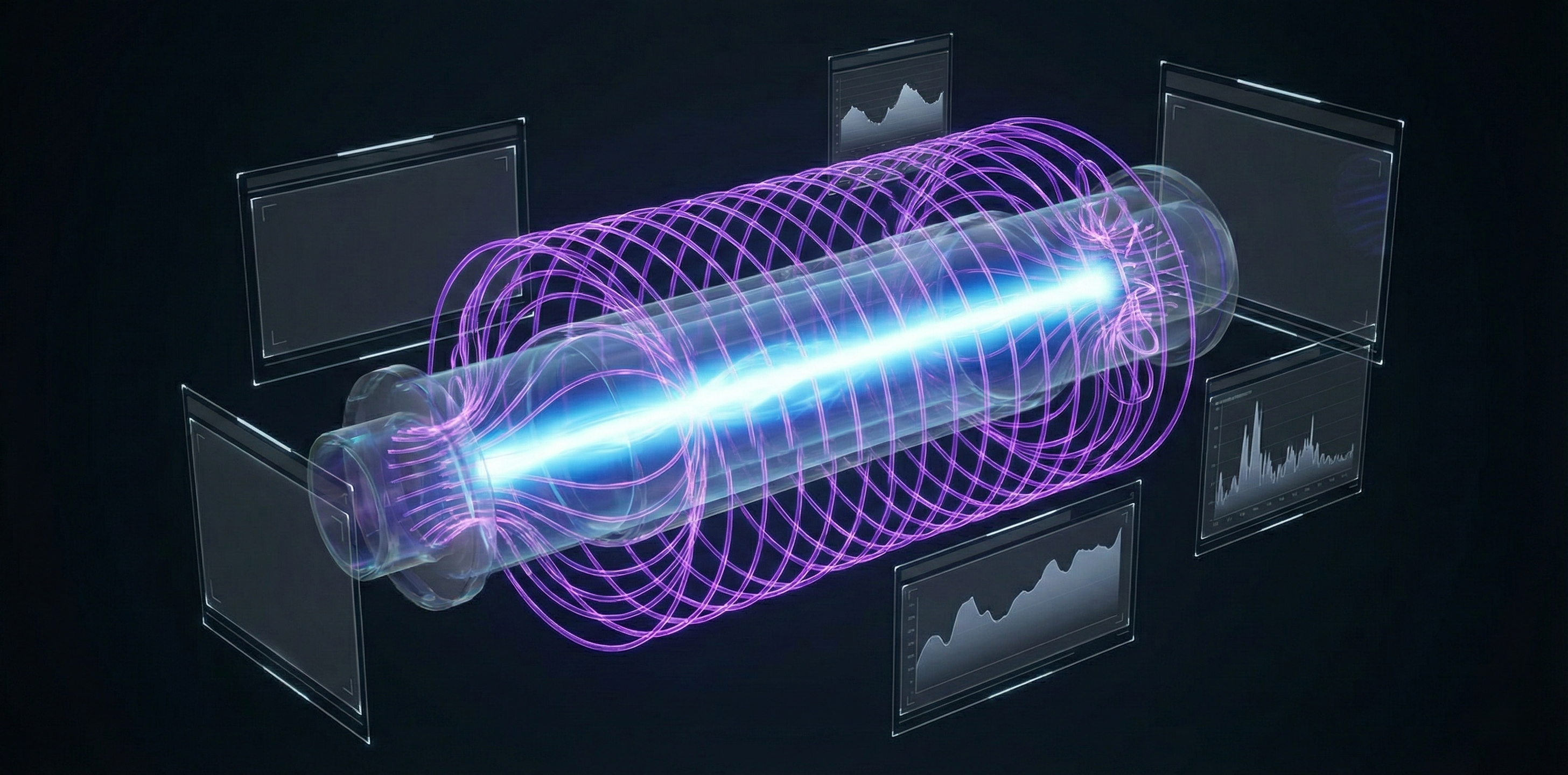
Plasma is a gas of ions and free electrons. It naturally expands to fill its container due to high internal pressure (P = nkT). To shape it into a blade, one needs magnetic confinement, using the Lorentz force (F = q(v*B)) to spiral the charged particles along field lines.
-
Toroidal vs. Linear : In fusion reactors like Tokamaks, plasma is contained in a torus (donut shape) to prevent end losses. A lightsaber is a linear trap. In linear magnetic mirrors, plasma leaks out the ends. A "real" lightsaber would need a magnetic field generated at the hilt that extends out, loops back at the tip, and returns.
-
Magnetic Pressure : To contain the plasma pressure (Pthermal), the magnetic pressure ( Pmag = B²/2u0 ) must be greater. For a high-density plasma required to cut steel, the required magnetic field $B$ would be in the range of tens of Teslas, achievable only by massive superconducting magnets (like those in ITER), not handheld devices.
Magnetic Reconnection: Why Duels Are Impossible
A fundamental issue arises when two magnetically contained blades clash. In the movies, they bounce off each other with a crackle.
-
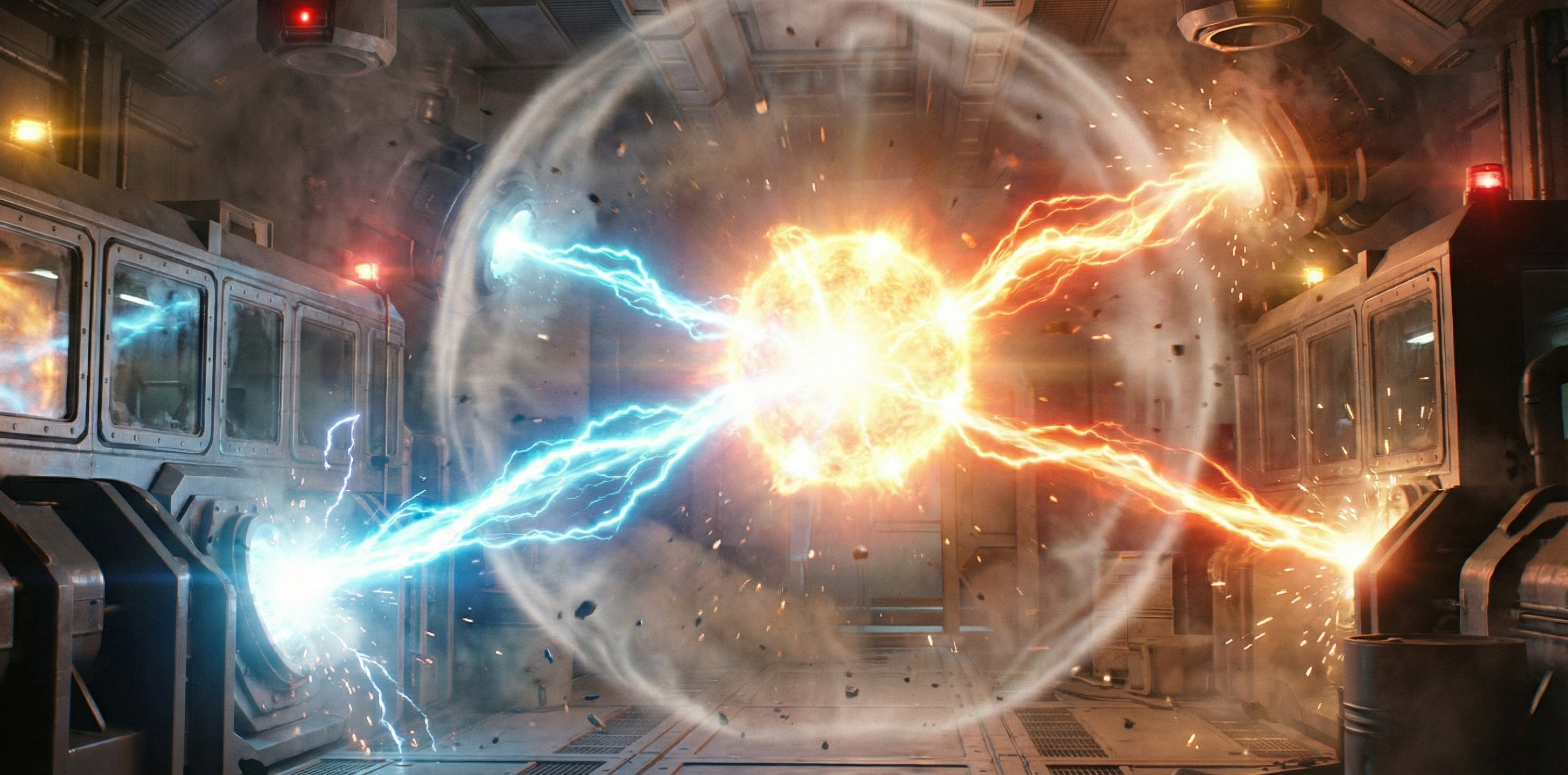
The Physics : According to plasma physics, when magnetic field lines of opposite polarity intersect, they undergo "magnetic reconnection." The magnetic topology rearranges, converting magnetic energy into kinetic energy and heat explosively.
-
The Result : Instead of a solid clash, the fields would merge and potentially explode, releasing the confined plasma. At best, the blades would pass through each other (ghosting); at worst, the interaction would create a solar-flare-like detonation that would incinerate both combatants.
Thermodynamics: The Radiant Heat Issue
Even if one creates a contained plasma blade at 20,000 Kelvin (necessary to cut steel instantly), the Stefan-Boltzmann Law dictates the power radiated:
where σ = 5.67 * 10⁸W/(m²*K⁴).
-
The Calculation : For a blade with surface area A = 0.1 m² and T = 20,000K:
P = 5.67 * 10⁻⁸ * 0.1 * (20,000)⁴P ≈ 5.67 * 10⁻⁹ * 1.6 * 10¹⁷ ≈ 9.07 * 10⁸ W 907 MW -
The Consequence : The blade would radiate nearly 900 Megawatts of power as light and heat. The air around the saber would instantly ionize into ozone and plasma. The wielder's hands and face would be vaporized by the UV and X-ray radiation long before they could swing the weapon.
-
Conclusion : A "real" lightsaber requires a magical "force field" that blocks all thermal radiation while letting visible light pass—a material property that contradicts basic thermodynamics.