
 EN
EN

The Mechanics of Extension:Disney's "Real" Lightsaber vs.Hobbyist Engineering
The "Holy Grail"of lightsaber prop making is a self-contained hilt that extends a blade on command and retracts it fully,disappearing into the handle.This section analyzes the competing mechanical approaches to achieving this effect,moving beyond simple static tubes.
Disney's Patent:The Bi-Stable Tape Spring Implementation
Disney's "real"lightsaber,revealed for the Galactic Starcruiser experience and patented under US Patent 10,065,127B1,utilizes a mechanism inspired by space-grade extendable booms.The core concept employs "bi-stable tape springs",similar to a carpenter's tape measure but with a critical twist.
Storage: Two spools of semi-cylindrical plastic material are housed in the hilt.The material is flattened when wound on the spool to save volume.
The "Zipper"Guideway:A motor drives the spools to unwind.As the tapes leave the spool,they pass through a "blade forming guideway"that forces them to curve into a semi-circle.Crucially,the two tapes are oriented opposite each other.
Interlocking: The two curved tapes overlap and interlock to form a complete,rigid cylinder.This creates a structure that is much stronger than a single tape measure.
Illumination: A flexible string of LEDs(a "ladder"of light sources)is mounted on a third spool or loosely coiled.It is pulled up the center of the forming cylinder by a "blade end cap"attached to the tips of the tapes.
Limitations: While visually perfect for extension,this design is structurally fragile.The "blade" is merely thin plastic and cannot withstand any impact.Centrifugal force from a fast swing causes the tapes to buckle or separate,ruining the illusion.It is strictly a theatrical prop,not a toy for consumers to duel with.
Volumetric Constraints & Commercial Viability: Furthermore, the sheer volume of the internal electromechanical assembly presents a major barrier to mass production. Accommodating two tape spools, a dedicated LED retraction system, and a high-torque motor requires a massive internal chassis. This forces the hilt diameter to be disproportionately large and bulky compared to screen-accurate props. Fans and enthusiasts who have analyzed the internal schematics often remark that this "oversized" form factor makes the design feel like an unrefined engineering prototype rather than a sleek consumer commodity, leading to skepticism that it could ever be miniaturized enough for a viable commercial release.
HeroTech's Approach: The Concept Behind the Legendary Monkey King's Magic Staff
A more robust hobbyist approach comes from the engineering group HeroTech. Their design simplifies the mechanism while improving the lighting quality. Instead of pulling a separate LED string inside plastic tapes, they integrate the lighting directly onto the extending medium.
The Mechanism: They use a "magic appearing cane" mechanism—a coiled sheet of spring steel or plastic that naturally wants to expand into a cone/cylinder.
The Innovation: They utilize flexible PCB strips with Chip-on-Board (COB) LEDs. COB technology packs LEDs so densely that they appear as a solid bar of light, theoretically reducing the "dot" effect of traditional strips. The flexible PCB is wound up inside the hilt and extends along with the support structure.
The Structural Reality & Optimization: However, a critical limitation in this prototype is that the LED beads are exposed on the exterior of the blade. To fully mask the "corn effect" (visible distinct LEDs), the design currently relies on the blade rapidly rotating to create a persistence of vision. This necessity for mechanical rotation makes the design impractical for a mass-produced commercial product. The optimal engineering solution would be to embed the COB strip inside the hollow "magic staff" structure. This would protect the electronics and achieve a uniform glow without the complex and fragile requirement of spinning.
Form Factor Breakthrough: Remarkably, despite the complex internal machinery required for the motor and spooling, HeroTech has successfully miniaturized the assembly. They have achieved a hilt form factor that is nearly identical in dimensions to the movie props. This addresses the common criticism of "oversized" handles seen in other attempts (like the Disney patent), proving that a self-extending mechanism can indeed be fitted into a screen-accurate chassis.
Control: They use a Xiao RP2040 microcontroller (a small, powerful chip) to control the motor driver and the LED data, synchronizing the light extension with the physical extension.
Trade-off: Like the Disney version, the mechanical complexity of the spooling mechanism consumes most of the internal volume, leaving little room for a large battery. Runtimes are short, and the mechanism is prone to jamming if dust or debris enters the "zipper".
Hacksmith's Protosaber:Laminar Flow Plasma Physics
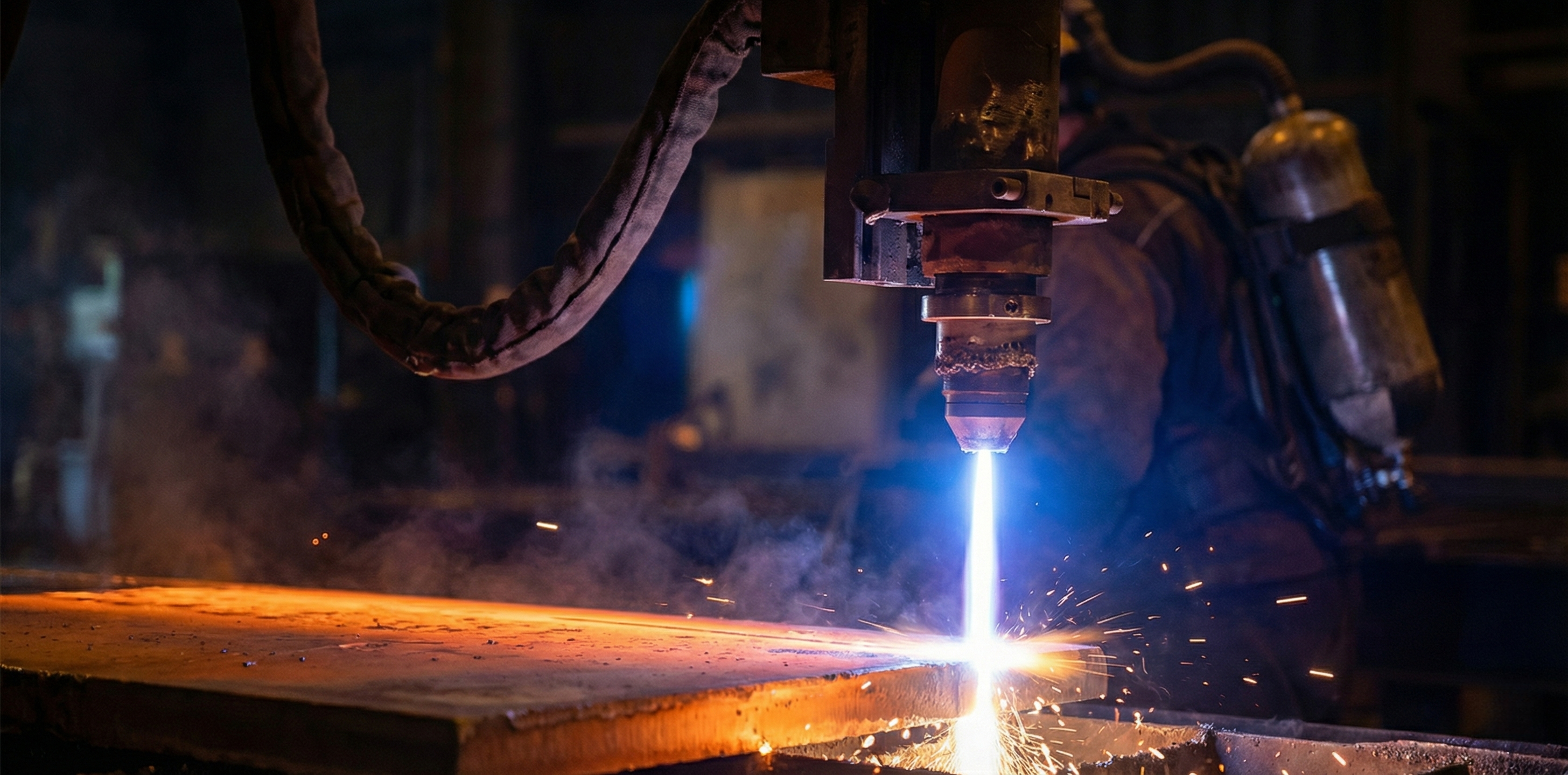
Hacksmith Industries took the "burningblade" approach literally. Recognizing that asolid retractable solid is currently impossible to make durable,they opted for a directed energy beam.Their "Protosaber"is not a solid object but a focused stream of high-temperature gas.
Fuel Source: Liquid Petroleum Gas (LPG)and Oxygen are stored in an external backpack.This mimics the ancient "Protosaber"design from Star Wars lore,which required a belt-mounted power pack.
Laminar Flow Nozzle:The key technology is the nozzle,typically used in high-end glass blowing or fountain design.A standard nozzle creates turbulent flow (Reynolds number>4000),resulting in a bushy,chaotic flame.A laminar flow nozzle organizes the gas using mesh screens and straws to ensure all gas molecules move in parallel layers(Reynolds number<2000).
Plasma Generation: When this highly organized gas stream is ignited,it maintains a cohesive,needle-like "beam"shape for a meter or more before dissipating into turbulence.
Color Chemistry: By injecting salts into the flame,they alter the plasma's emission spectrum.Boric acid creates a green blade;strontium chloride creates red;sodium chloride creates yellow(similar to Rey's saber).
Physical Reality: The blade burns at approximately 4000°F(2200℃).It can cut through steel doors, mimicking the movie physics.However,it is an uncontained flamethrower.It does not stop at a fixed length,and it cannot "clash"with another blade—two beams would simply pass through each other.
Damien Tech STEM-Driveand Helix Deployment System
Solution A: The "Ruyi" STEM-Drive System (Flagship Model)
Positioning: Ultimate realism, seamless appearance, perfect light uniformity.
- Technical Principle
Based on the aerospace-grade STEM (Storable Tubular Extendible Member) mechanism. It utilizes geometric transformation to store a flat BoPET film within the hilt. Driven by a motor, the BoPET passes through a specialized forming die, forcing it to curl and interlock upon deployment into a rigid, hollow cylindrical tube.
- Core Material: Heat-set BoPET
Abandoning standard Polycarbonate due to creep issues, we utilize Aerospace-grade BoPET. Processed with a specific 130°C heat-setting technique, the material acquires a permanent "curl memory." Even after long-term compressed storage, it instantly snaps back into a perfect tube shape upon deployment, offering stiffness comparable to spring steel.
- Mechanical Innovation: Dual-Path Drive
To solve the issue of light strips wrinkling when bonded to the structure, we pioneered the "Master-Slave Spools" design:
Master Driver: Motorized spool responsible for the rigid push/pull of the BoPET tube.
Slave Tensioner: Independently stores the ultra-thin COB strip. Equipped with a Constant Force Spring and a Slip Ring. During retraction, the spring automatically recoils the strip, keeping it under constant tension to prevent jamming.
Solution B: The "Helix" Deployment System (Performance Model)
Positioning: Minimalist structure, rapid deployment, industrial mechanical aesthetic.
- Technical Principle
Utilizing the Bi-stable Helical Extension principle. The blade material is pre-formed into a tight helix coil. It relies on the material's inherent high elastic potential energy for deployment, creating a self-supporting structure that is extremely durable and impact-resistant.
- Key Advantages
Direct Drive & Zero Interference. Requires only a single motor to release the mechanism, deploying instantly via physical spring force. The light strip follows the spiral groove, creating a unique "Vortex Beam" effect.