 EN
EN

Analysis of Manufacturing Processes and Material Mechanics for Flat Luminous Lightsaber Blades
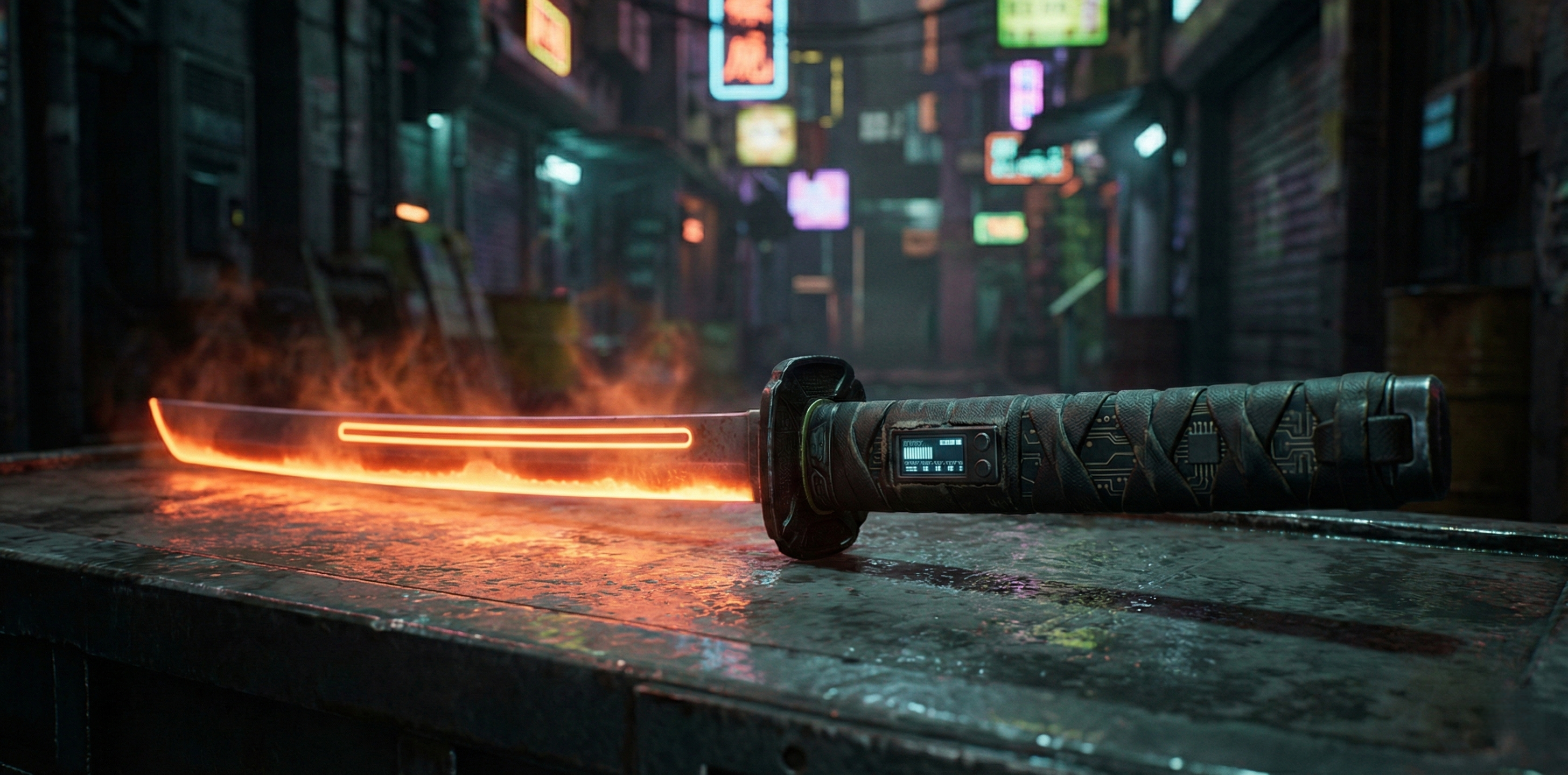
Flat Luminous Blades differ significantly from traditional cylindrical lightsabers. While often visually compared to the "Darksaber" from Star Wars, their design inspiration stems from a broader spectrum of pop culture and Eastern aesthetics.
Sci-Fi Media: Examples include the Thermal Katana in Cyberpunk 2077, the glowing blades in Rebel Moon, and weaponry in Predator: Badlands.
Eastern Wuxia: In Chinese martial arts fiction, these blades visualize "Sword Energy" (Jian Qi) or internal power. Unlike cylindrical blades, flat blades accurately replicate the streamlined aesthetics of traditional cold weapons like the Tang Dao and Katana.
Physical Defect Analysis of Current Manufacturing Processes
Various methods exist for manufacturing Pixel Flat Blades, but they vary significantly in dueling durability. The following analysis is based on material mechanics:
A. 3D Printing - SLA/FDM
Application Status: Static Display Only
Both resin and PLA are brittle materials with poor interlayer bonding and zero impact toughness. They are suitable only for cosplay props, not combat.
B. CNC Machined Polycarbonate Plates
Application Status: Solid light-guiding versions possess adequate strength; however, hollow pixel versions are structurally extremely weak.
Analysis: While solid plates are strong, hollowed-out pixel versions require gluing two halves.
Shear Failure: Bending creates immense horizontal shear stress between the layers, causing the adhesive bond to fail and delaminate.
Notch Sensitivity: CNC machining leaves microscopic tool marks. These act as stress concentration points, causing the blade to snap under impact.
C. Injection Molding
Application Status: Strength is superior to machined plates, yet still insufficient to withstand heavy dueling.
Analysis:
Molecular Weight: Injection molding requires low-viscosity (short-chain) PC for flow. Short molecular chains intrinsically mean lower impact strength compared to extrusion-grade PC.
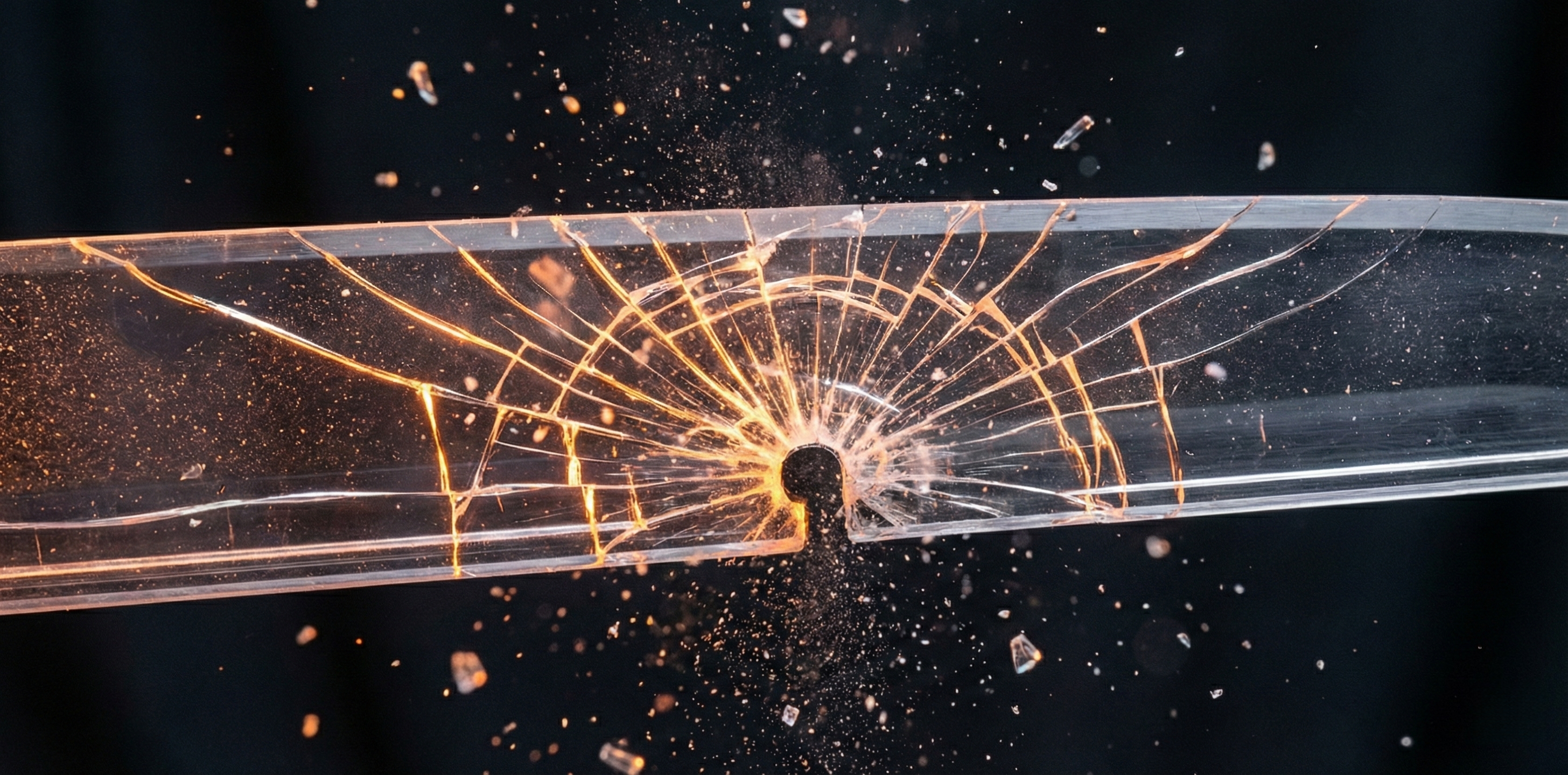
Internal Stress: The cooling process of flat, long shapes locks in residual stresses, making the blade prone to shattering like tempered glass.
Optimal Solution for Straight/Slightly Curved Blades: PC Profile Extrusion
For Straight Tang Daos or Slightly Curved Katanas, the industry standard for durability is PC Profile Extrusion.
Physics: Extrusion uses high-molecular-weight PC with an integral skin, offering maximum toughness.
Limitations: Extruded profiles are straight. Creating a curve requires secondary machining. This allows only for a slight curve. Deep machining for heavy curves would excessively thin the walls, compromising structural integrity.
Ultimate Solution for Complex/Deeply Curved Blades: Composite Material Structure
For complex shapes or deeply curved katanas where PC fails, the industry has adopted a Composite Hybrid Solution.
Structural Principle
This solution combines two distinct materials:
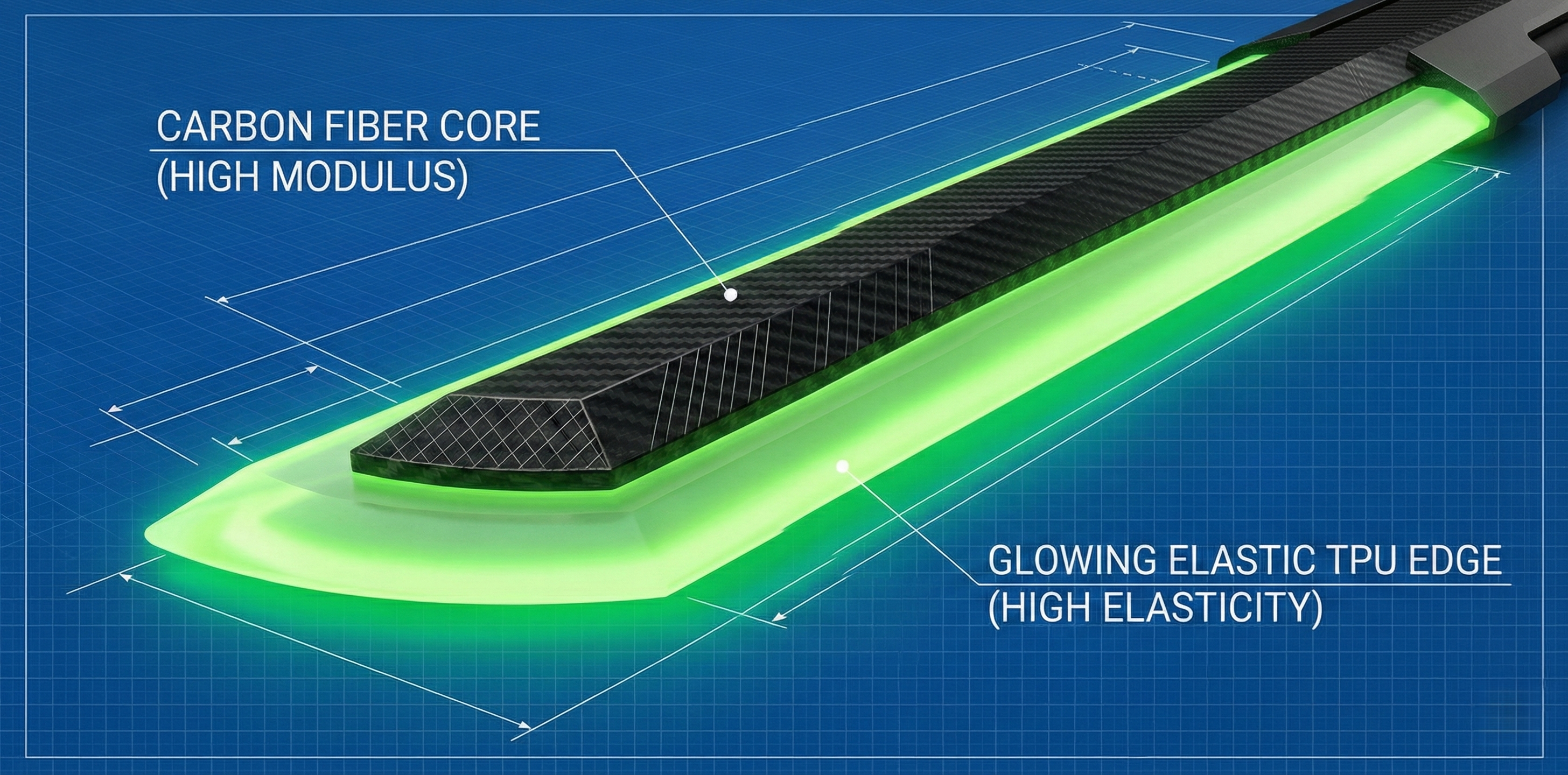
The Spine: High Modulus Material
Carbon Fiber/PCGF/Steel/Carbon Steel
Function: Carbon Fiber or Steel provides structural rigidity. With a high Young's Modulus, it prevents the blade from wobbling. While the surface may scuff, the structural core is nearly unbreakable.
The Edge: High Elasticity TPU)
TPU
Energy Absorption
Function: TPU acts as an impact absorber. Unlike PC, which suffers permanent dents (plastic deformation) or cracks, TPU possesses elastic memory. It deforms to absorb shock and instantly rebounds to its original shape.