 EN
EN

The Spinning Inquisitor Lightsaber – Engineering Fiction into Reality
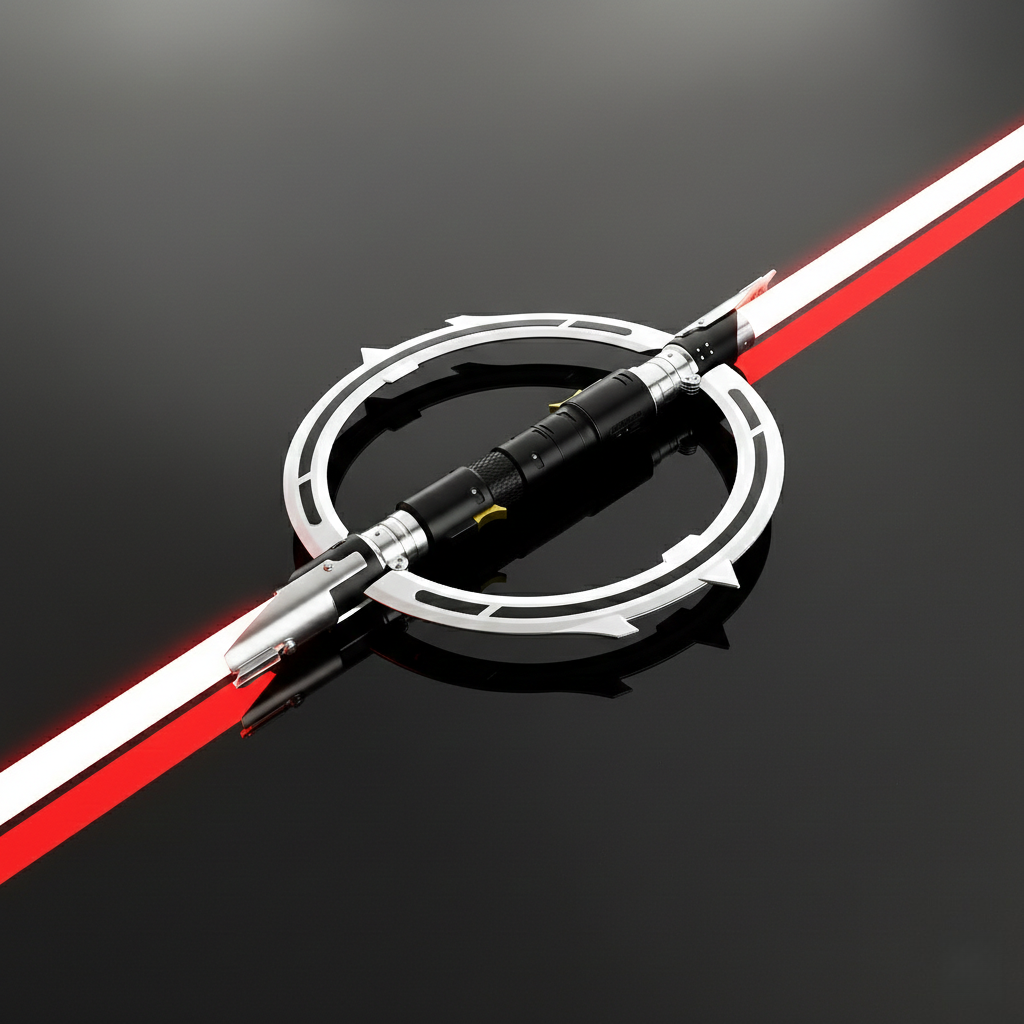
Breaking the Laws of Physics (Selectively) In Star Wars lore, the Inquisitor's lightsaber is iconic for its spinning ring and, absurdly, its ability to let users "fly" like helicopters. Let's be clear: using a lightsaber to generate lift is pure fictional nonsense. However, making the saber spin is a grounded mechanical engineering challenge. The difficulty isn't making it move; it's making it move without becoming a liability.
The Core Challenge: Safety First The biggest obstacle to a real-world spinning saber is the "Saw Effect." If we were to manufacture a solid metal spinning ring, the rotational inertia combined with sharp metal edges would effectively create a powered circular saw. A single slip could result in deep lacerations or worse. This safety hazard is exactly why existing versions are limited to DIY prototypes and have never been truly mass-produced.
Material Science: The TPU & PCGF Solution To solve the kinetic energy danger, we must rethink materials:
Motor Logic: The motor requires a specific balance—high torque to spin the heavy polycarbonate blades, but equipped with immediate Stall Protection. If the ring hits an obstruction (like a hand), the motor must cease power instantly to prevent injury.
Composite Construction: Solid metal is too heavy and dangerous; standard plastic feels cheap. Our engineering solution involves a composite structure: a core of PCGF (Polycarbonate Glass Fiber) for structural rigidity and lightweight performance, encapsulated in TPU (Thermoplastic Polyurethane).
Surface Finishing: The TPU exterior is treated with a glossy black finish. This maintains a premium, metal-like aesthetic while ensuring that the rotating edges are soft and impact-absorbent, drastically reducing the risk of injury.
Electronic Architecture: The Case for Independent Power Trying to route power from the main grip to a spinning ring via slip rings is a flaw. Slip rings suffer from friction wear, electrical noise, and high risks of short-circuiting under heavy loads. We have adopted a Decoupled Circuit Design:
The Grip: Houses the main battery and motor to control rotation.
The Ring: Contains its own independent battery source and electronics to power the blades. This physical separation eliminates the risk of power failure due to rotating contacts and removes the need for complex mechanical locking systems. It is the only logical path for a durable product.
While many "saber smiths" have created spinning props for personal display, none have solved the safety and reliability issues required for a consumer product—until now. Damien Tech is currently developing the world's first mass-producible, safety-compliant Spinning Inquisitor Saber. Rumor has it the safety protocols have been finalized. Stay tuned for the launch.