
 EN
EN

External Safety Component: Heat Shrink Tube
External Safety Component: Heat Shrink Tube
In the realm of Combat Sabers, to prevent split-type tips from detaching under extreme impact, the industry universally adopts the Heat Shrink Tube as the final line of physical defense.
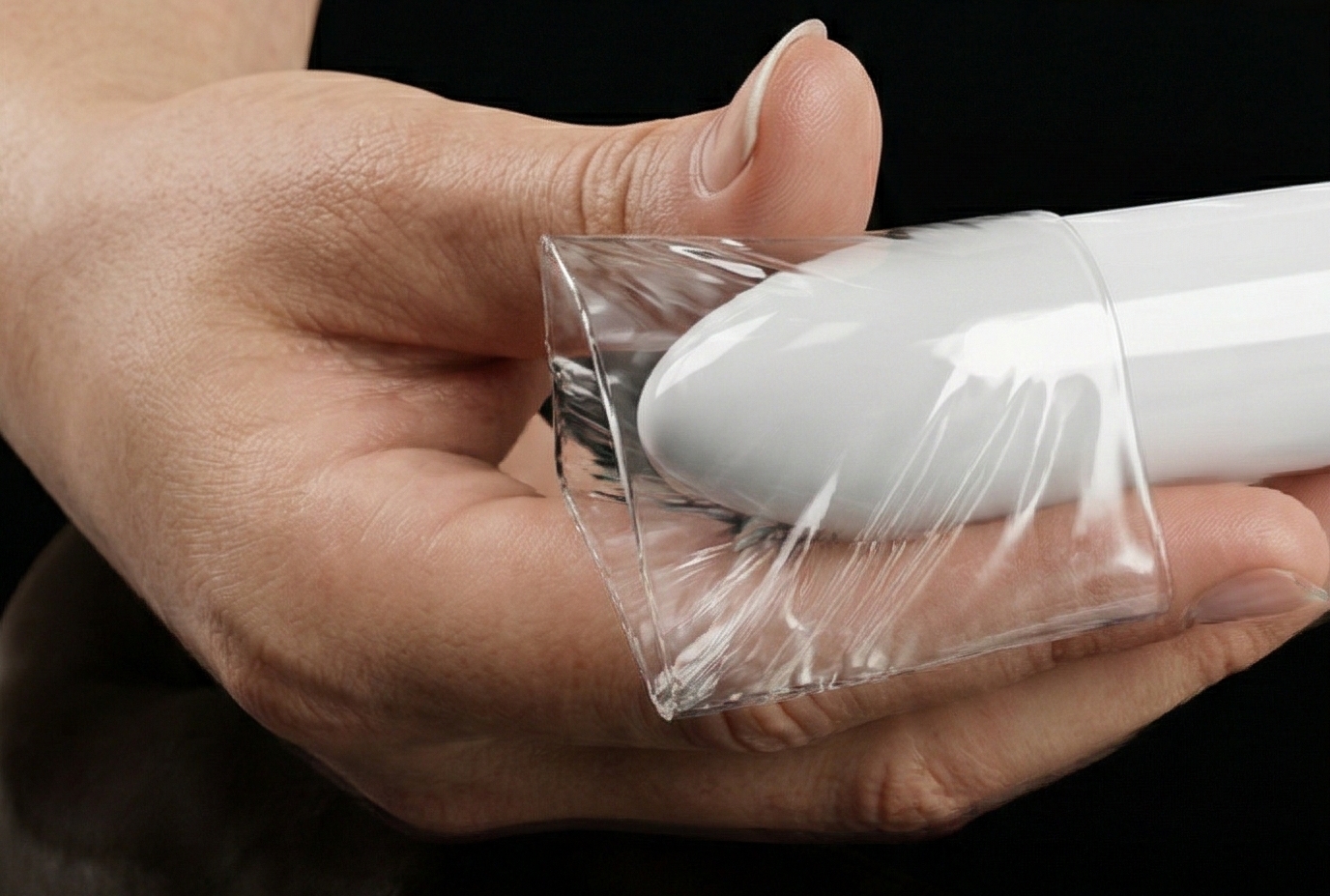
Physics & Material:
Material: Typically uses high-transparency PVC (Polyvinyl Chloride) or industrial-grade Polyolefin.
Fixing Logic: Leverages the Heat Shrink Memory of the material. Upon application of hot air, the tube shrinks radially, generating immense Hoop Stress. This force tightly clamps the PC tube wall and the inserted tip together.
Strength: Under this high-pressure wrapping, the friction between the tip and the tube wall is substantial. In practice, many combat-grade blades secured with heat shrink tubing cannot be manually removed, even without internal adhesive.
Aesthetic Trade-off:
While this is the cheapest and most effective safety solution, it introduces a significant aesthetic flaw. The tubing creates a visible "patch" at the tip, and due to a refractive index mismatch with the PC tube, it disrupts the visual continuity of the blade. Thus, it is often regarded as a utilitarian sacrifice rather than a mark of perfect craftsmanship.
Diffusion Film: Core of Baselit Blades
For Baselit (In-Hilt LED) sabers where the light source is in the handle, the diffusion film is the decisive factor for blade brightness.
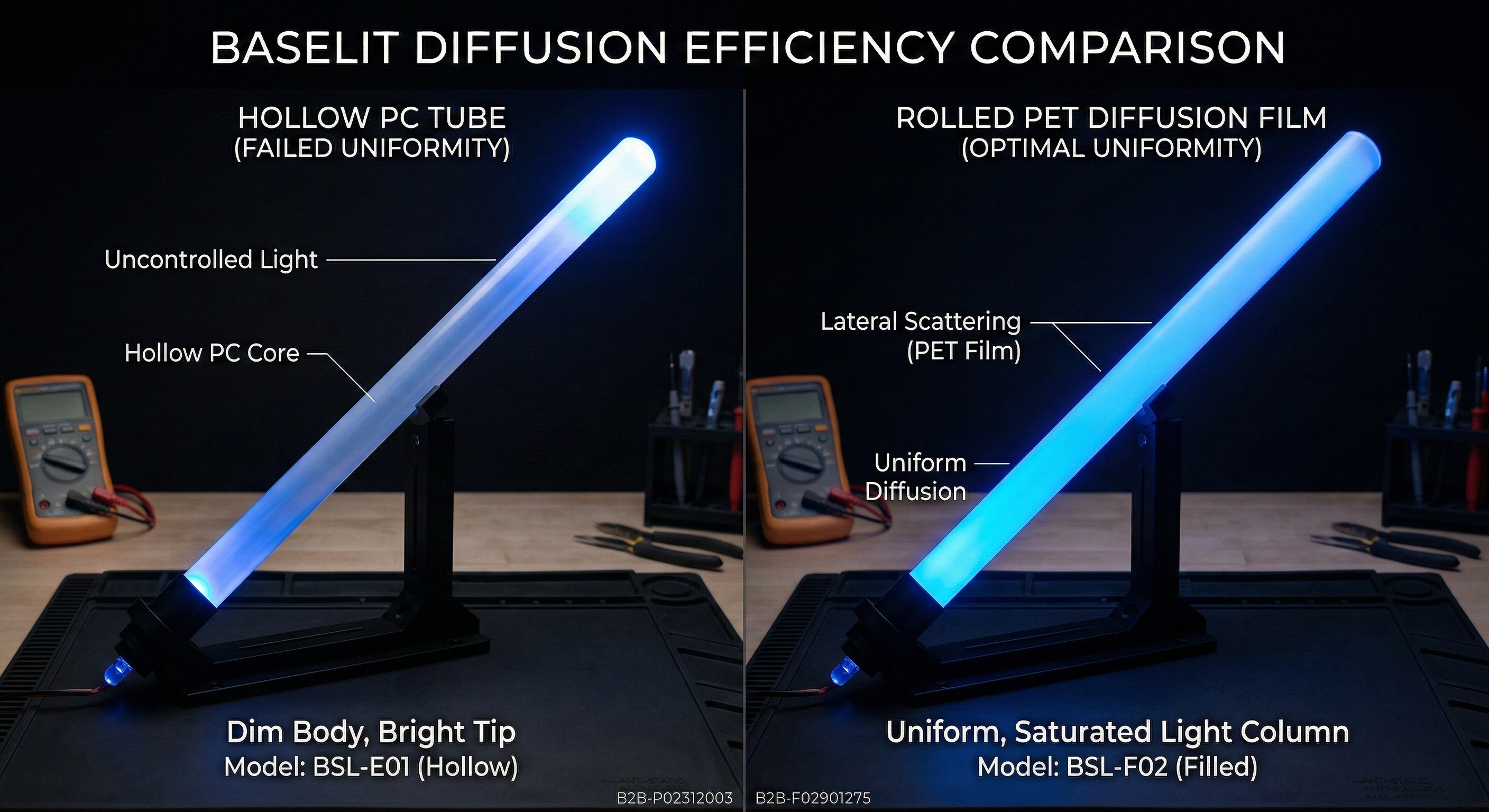
Functional Logic:
Light Extraction: If the PC tube is empty, light travels straight to the tip via Total Internal Reflection, similar to fiber optics, causing a "dim body, bright tip" phenomenon.
Uniformity: The diffusion film, typically a rolled sheet of Optical Grade PET or BOPP Laser Film inserted into the tube, functions to disrupt total internal reflection. It scatters the axially traveling light laterally, causing the entire tube to glow uniformly.
Performance: High-quality diffusion film significantly boosts the overall brightness (Lumens) and color saturation, making the hollow tube appear as a solid column of light.
Diffusion Foam: The Pixel Blade Shield
For Pixel (Neopixel) Blades, the internal foam tube is not just an optical component but a vital structural element.
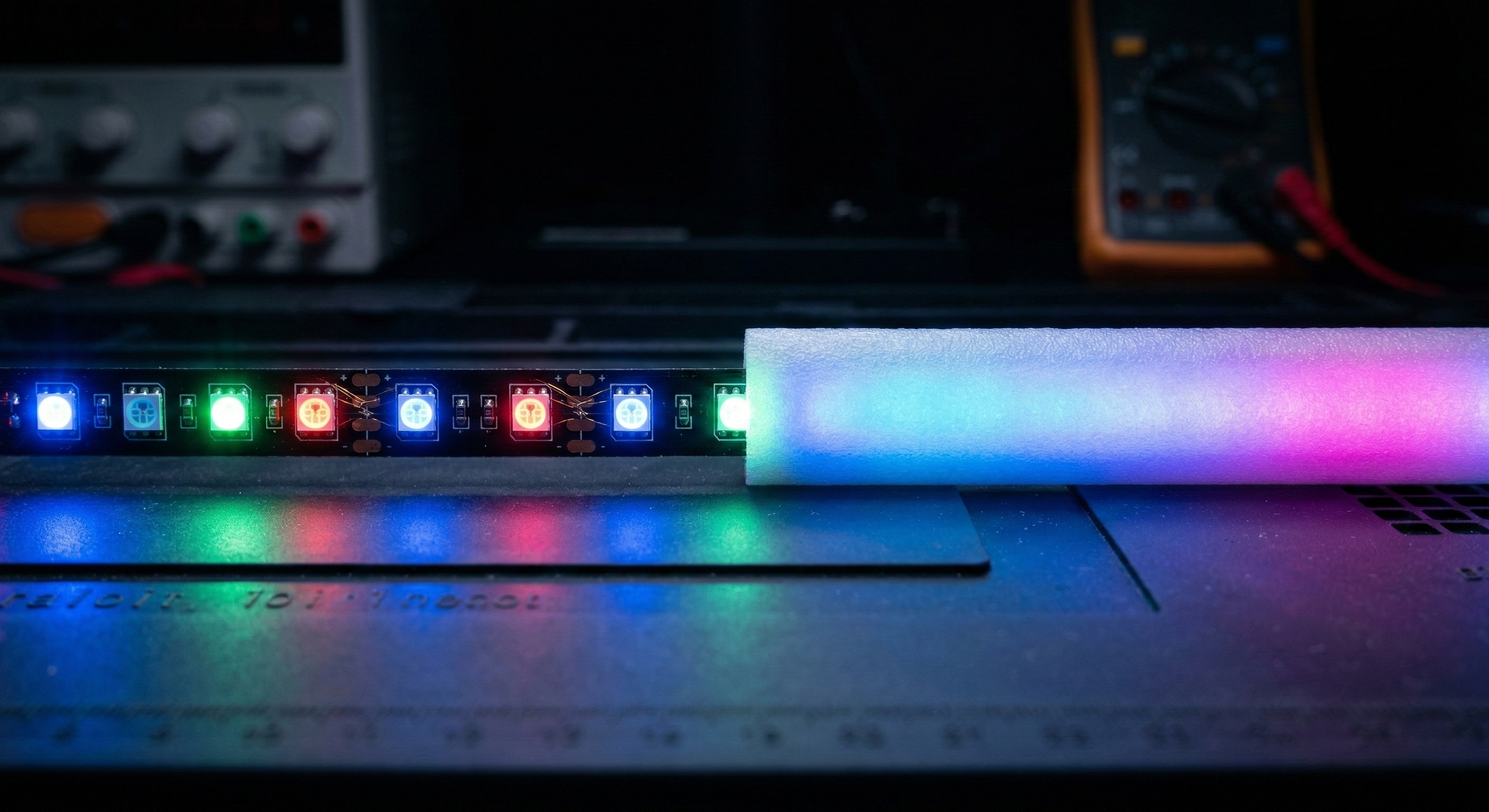
Dual Function:
Optical Softening (Eliminating "Corncob" Effect): Pixel strips are made of individual LEDs. Without foam, the blade exhibits visible granularity, known as the "Corn-on-the-cob Effect." High-density EPE (Expanded Polyethylene) or EVA foam diffuses these point sources into a continuous linear light.
Physical Protection: The pixel strip (PCB) is fragile. The foam acts as a buffer layer, absorbing impact energy during dueling to prevent strip breakage or component desoldering.
Tolerance Fit:
Anti-Rattle Design: The foam's Outer Diameter (OD) must precisely match the PC tube's Inner Diameter (ID) (typically a slight interference fit).
Length Matching: The foam length must exactly match the tube length.
Consequence: If the foam is undersized or too short, internal components will shift and collide during swinging. This creates a cheap "Rattling Noise," severely ruining the handling experience and potentially damaging the strip due to vibration.