 EN
EN

Composite Material Lightsaber Blade Technology
- Definition of Composite Material Blades
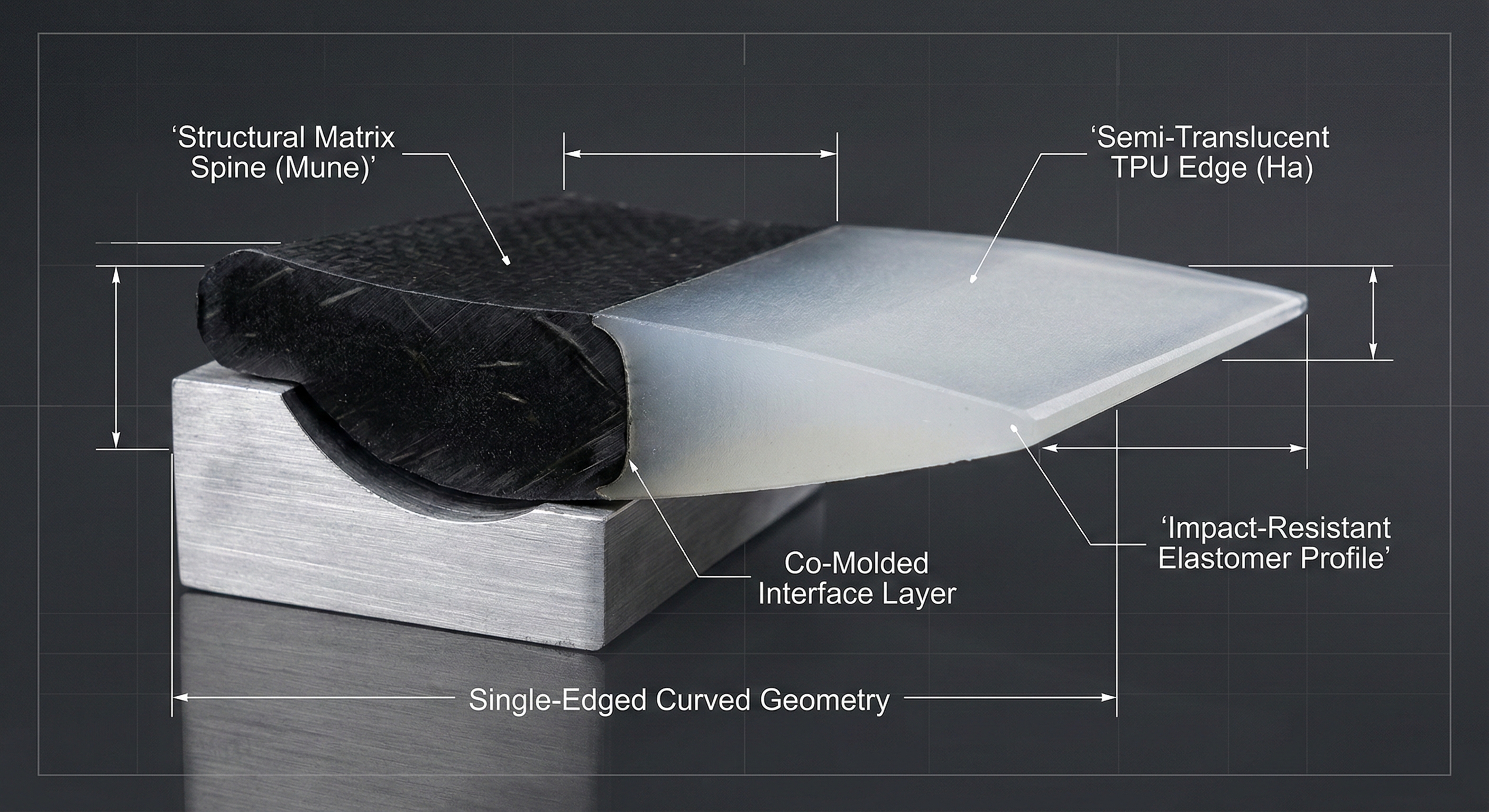
A Composite Material Blade is not a single homogeneous structure but an engineered blade where the main body is composed of at least two or more materials with distinct physical properties. This design philosophy stems from the dual pursuit of "Rigidity" and "Toughness." Structurally, these blades typically employ Two-Shot Molding or Mechanical Interlocking processes to functionally divide the blade into two independent mechanical zones:
The Spine: Responsible for providing structural rigidity, weight simulation, and support.
The Edge: Responsible for withstanding direct impact, absorbing kinetic energy, and preventing chipping.
- Material Configurations
Based on high-performance products currently in the market,composite blades are primarily categorized by the "Spine Matrix," while the edge uniformly adopts high-wear-resistant materials. The following are four mainstream industrial configurations:
PCGF Spine + TPU Edge
Physical Properties: PCGF (Glass Fiber Reinforced Polycarbonate) is modified by adding glass fibers to PC. Compared to pure PC, PCGF offers a significantly higher Flexural Modulus, making it resistant to deformation.
Advantage: This combination provides excellent stiffness while maintaining a relatively light weight, serving as the standard industrial solution for balancing handling and durability.
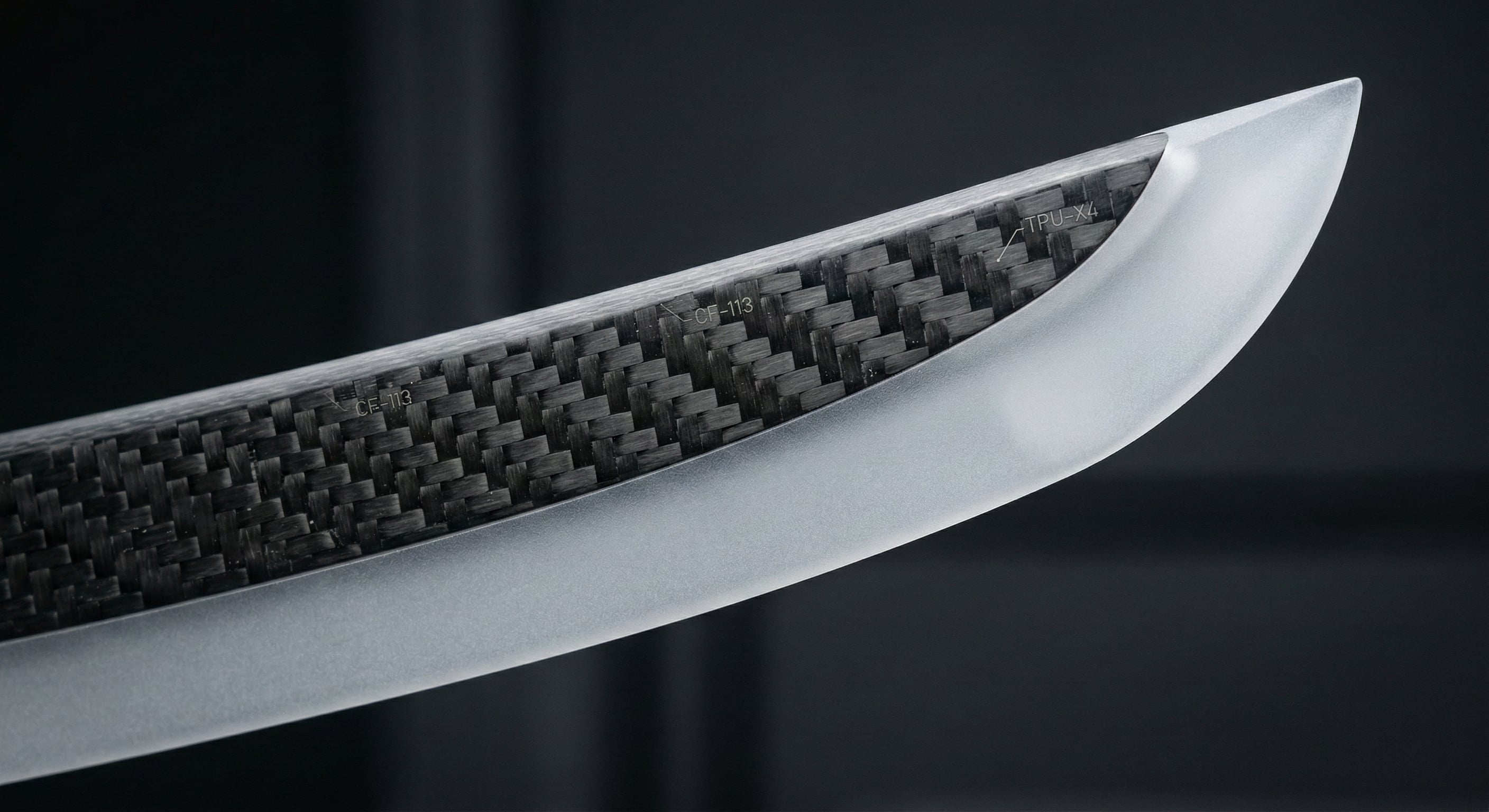
Carbon Fiber Spine + TPU Edge
Physical Properties: Carbon fiber composites possess an exceptionally high Specific Strength.
Advantage: Designed for users seeking ultimate agility. The carbon fiber spine offers rigidity close to metal but at one-fifth the weight of steel, drastically increasing swing speed.
Stainless Steel Spine + TPU Edge
Physical Properties: Utilizes industrial-grade 304 or 316L Stainless Steel as the framework.
Advantage: This combination falls under the "Weight Simulation Grade." The metal spine imparts a realistic heaviness and inertia to the blade, simulating the handling of actual cold weapons, ideal for strength training.
Carbon Steel Spine + TPU Edge
Physical Properties
This configuration typically utilizes heat-treated High Carbon Steel or Spring Steel as the framework. Through quenching and tempering processes, the material acquires an exceptionally high Yield Strength.
Core Advantage: Elasticity & Deformation Resistance
Compared to stainless steel, the definitive advantage of carbon steel lies in its superior Elastic Resilience. In high-intensity Saber Combat, a stainless steel spine is prone to Plastic Deformation (staying bent) when subjected to lateral stress or leverage. In contrast, a carbon steel spine possesses excellent memory; even if the blade undergoes significant flexing during intense dueling, it will instantly spring back to true. This characteristic makes it the ultimate "Combat-Grade" choice for durability and simulating the handling of real cold weapons.
Why the Edge Must Be TPU
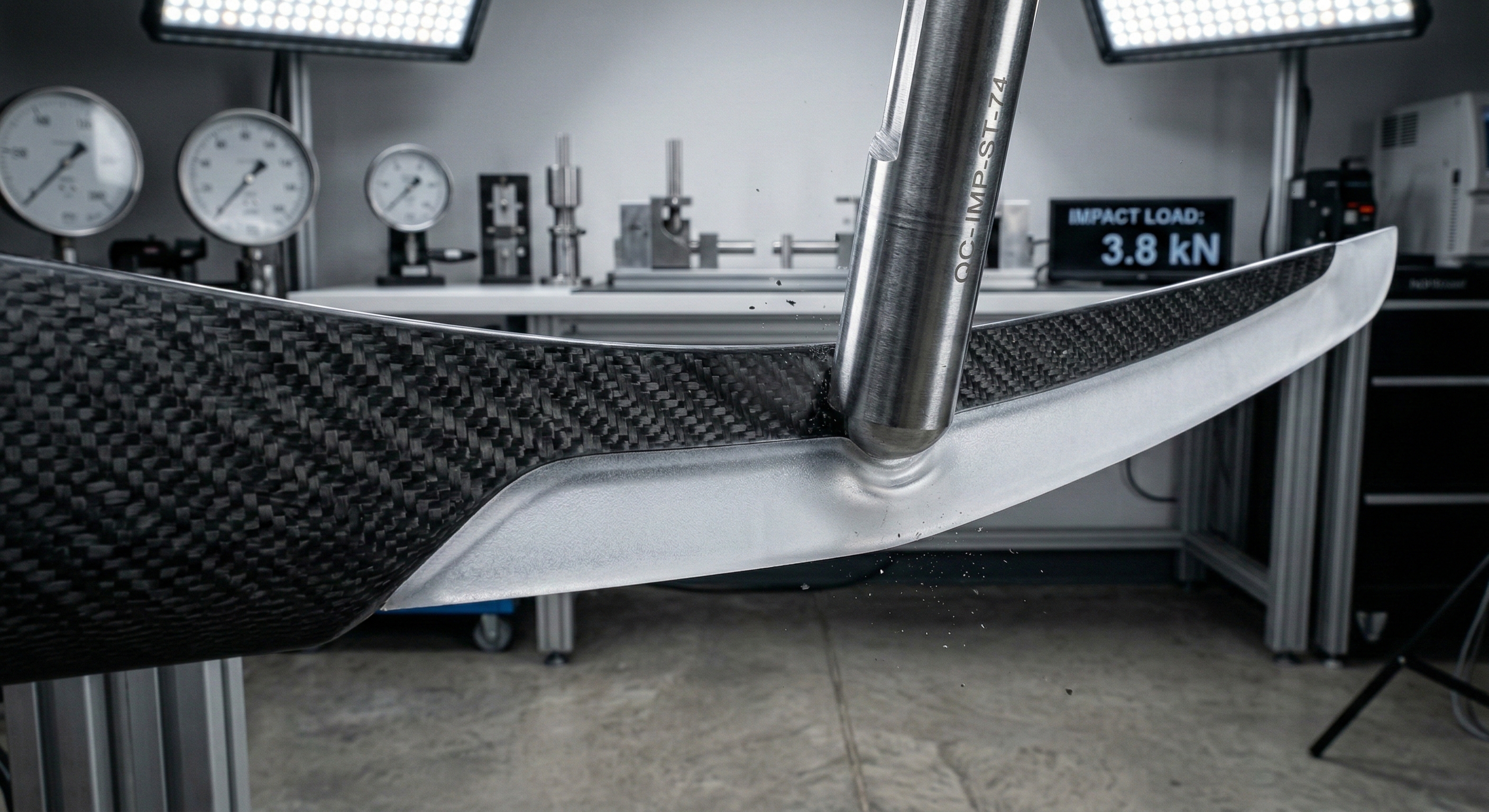
According to extensive market destructive testing and laboratory data, Thermoplastic Polyurethane (TPU) is currently the only material capable of withstanding high-intensity combat when selected for the "Edge" of composite blades.
Elastomer Characteristics: TPU is an elastomer, bridging the gap between rubber and plastic. When the blade edge suffers a violent impact, TPU relies on its Viscoelasticity to undergo microscopic deformation to absorb energy, then instantly recovers.
Tear Strength: Unlike rigid plastics like PC or PMMA, which are prone to brittle Chipping in thin-walled sections, TPU possesses exceptionally high Tear Strength. Data indicates that in repetitive striking tests targeting the edge, TPU is the sole material that does not exhibit structural failure.