
 EN
EN

Electrical Interface & Structural Chassis of Lightsaber Pixel Blades
A Pixel Blade is not just an illuminator but a complex electronic assembly. To ensure stable high-current transmission and structural integrity during heavy dueling, the design of its base electrical interface and internal chassis is critical.
Blade Side PCB: 3-Ring Concentric Interface
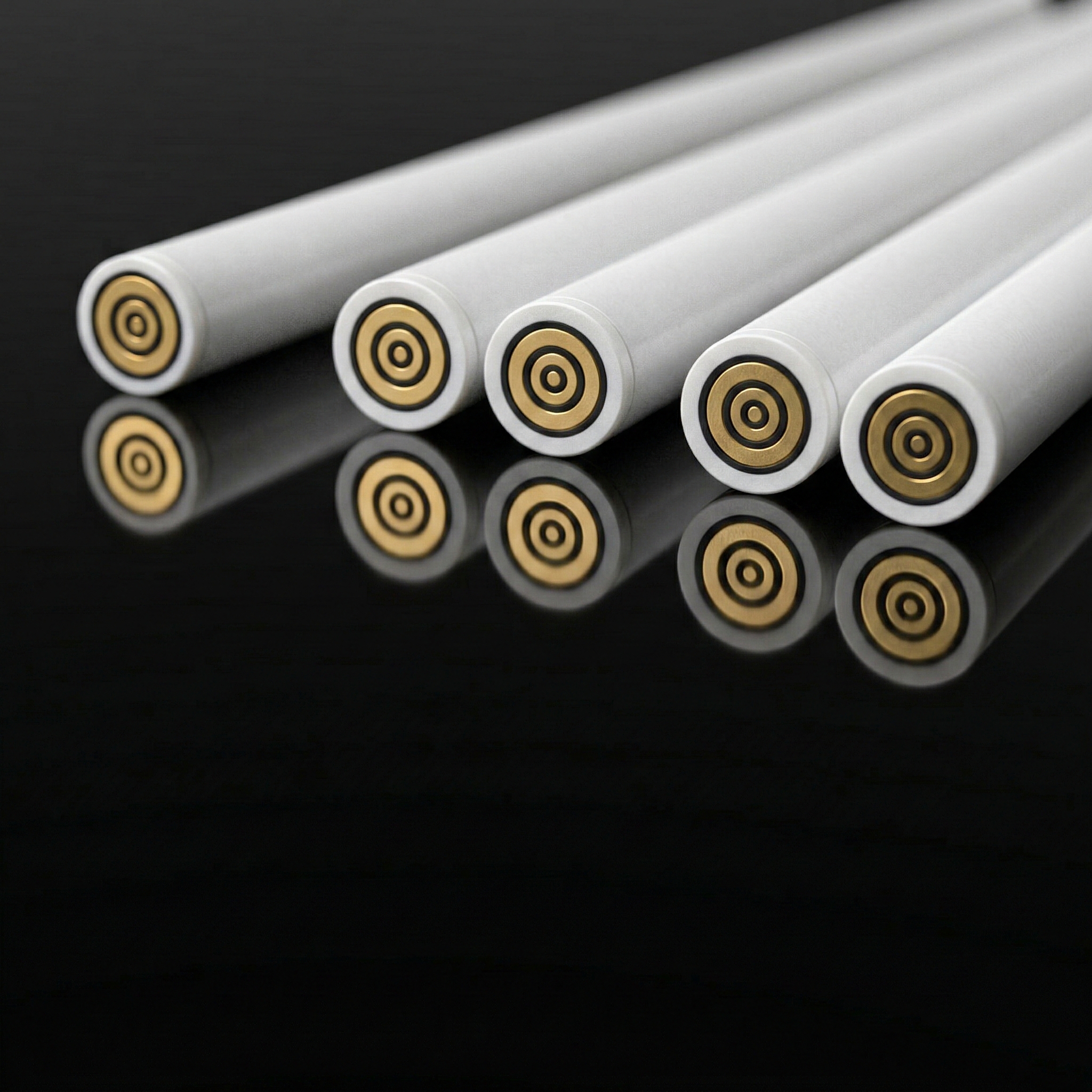
Contact Layout: The core circuit board located at the physical base of the blade is known as the Blade Side PCB. The industry standard employs a 3-Ring Concentric Circle immersion gold contact design, corresponding to Positive (V+), Data, and Negative (GND).
Physical Logic: This concentric geometry is designed for "Rotational Compatibility." Regardless of the blade's rotation angle (360°) when inserted into the hilt emitter, the ring contacts always maintain vertical alignment with the internal Pogo Pins. This ensures "blind insertion" capability and stable electrical continuity without needing to align specific angles.
Blade Side PCB Chassis
If the PCB is the interface, the Blade Side PCB Chassis is the "spine" of the pixel blade. It is the critical mechanical component connecting the circular PCB to the linear pixel LED strip.
Material Red Line: Injection Molded PC vs. 3D Printing
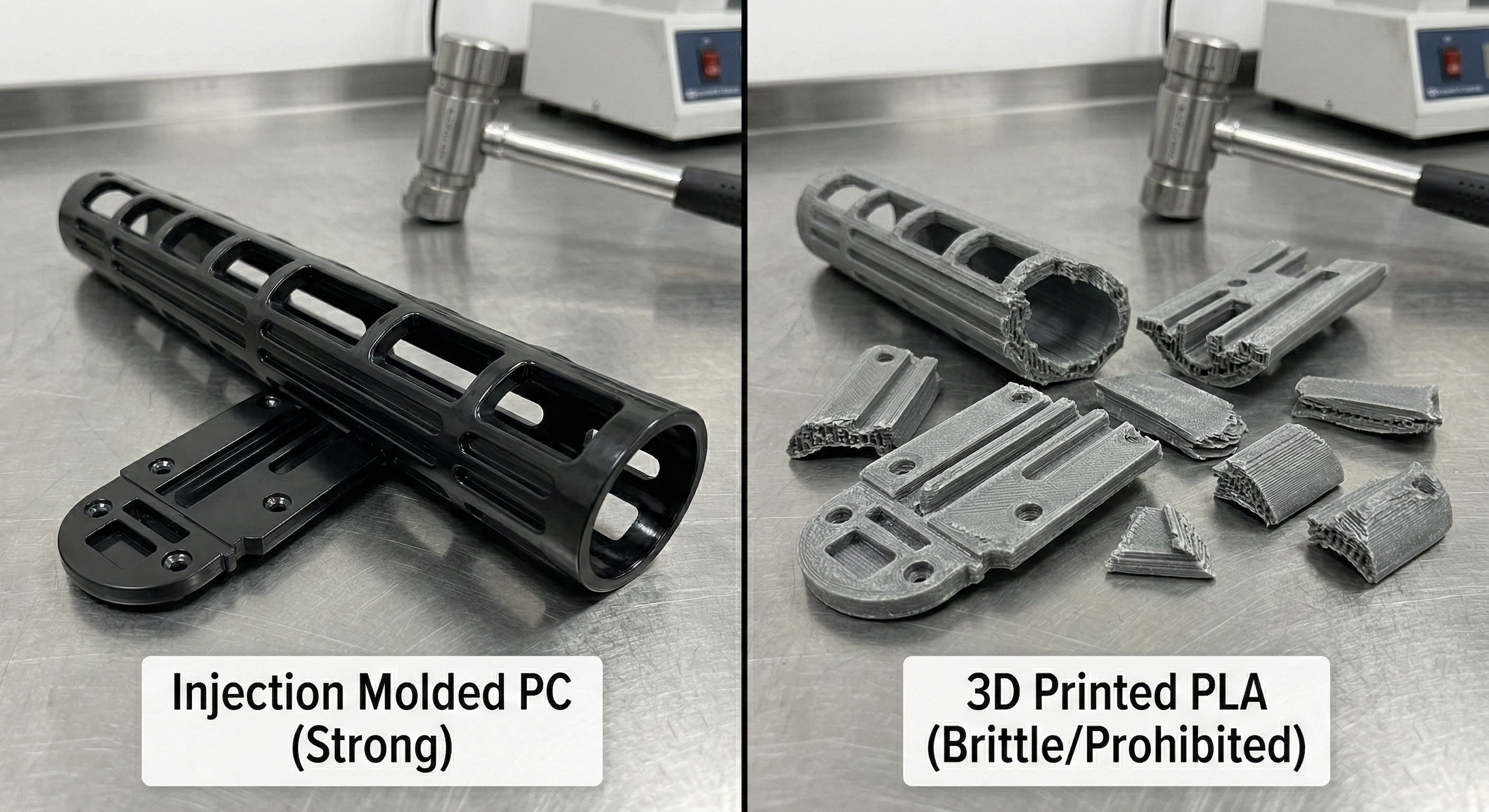
Industry Standard: To withstand combat-grade impact forces, this chassis must be manufactured using high-strength Injection Molded Polycarbonate (PC) or CNC Machined Metal.
Technical Prohibition: The use of standard SLA/FDM 3D Printed Parts is strictly prohibited.
Physical Reason: 3D printed materials (like PLA or resin) suffer from anisotropic structural weakness and are extremely Brittle. Under the centrifugal force and impact vibration of swinging, 3D printed chassis are prone to delamination or shattering, causing catastrophic failure.
Core Function: Anti-Rotation & Solder Protection
Mechanical Locking: The chassis features precision slots to rigidly lock the LED strip in place, while the base secures the circular PCB via screws or clips.
Physical Logic: Its primary role is Torque Elimination.
During Heavy Dueling, the blade is subjected to immense torsional forces. Without the rigid confinement of the chassis, the internal pixel strip would rotate relative to the base PCB.
This relative displacement would instantly apply shear force to the connecting Soldering Wires, leading to detachment and circuit failure.
Conclusion: A high-precision, high-strength injection-molded chassis is the decisive factor that transforms fragile electronic components into a Heavy Dueling grade product.