
 EN
EN

Lightsaber Electronic Core System: Architecture & Classification
The Lightsaber Core is the heart of the weapon. It integrates the battery, soundboard, speaker, and wiring into a unified structural frame. Its design is dictated by two main factors: the Illumination Method and the Hilt Structure.
Since the fundamental electronic components across these types are largely universal (sharing 90% of the same parts), we categorize them by their structural logic below, followed by a unified introduction to the components.
1. Classification by Illumination Logic
The choice of core determines the type of blade used.
Pixel Core (Neopixel Core)
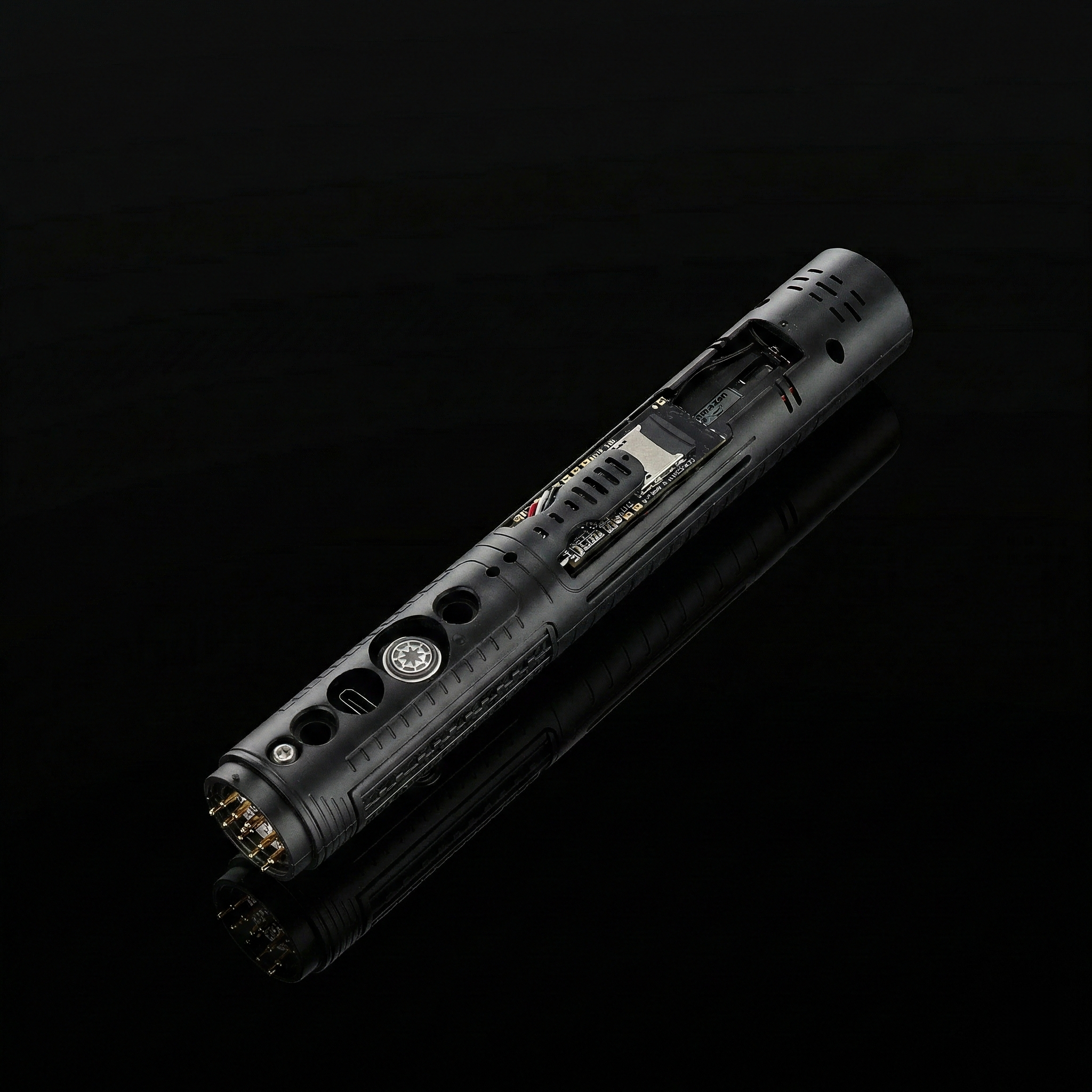
Mechanism: The core transmits Data and Power signals through a PCB with pogo pins directly to the blade. The LEDs are located inside the blade itself.
Purpose: For ultimate visual effects (scrolling ignition, unstable blade, rainbow effects).
Base lit Core (RGB Core)
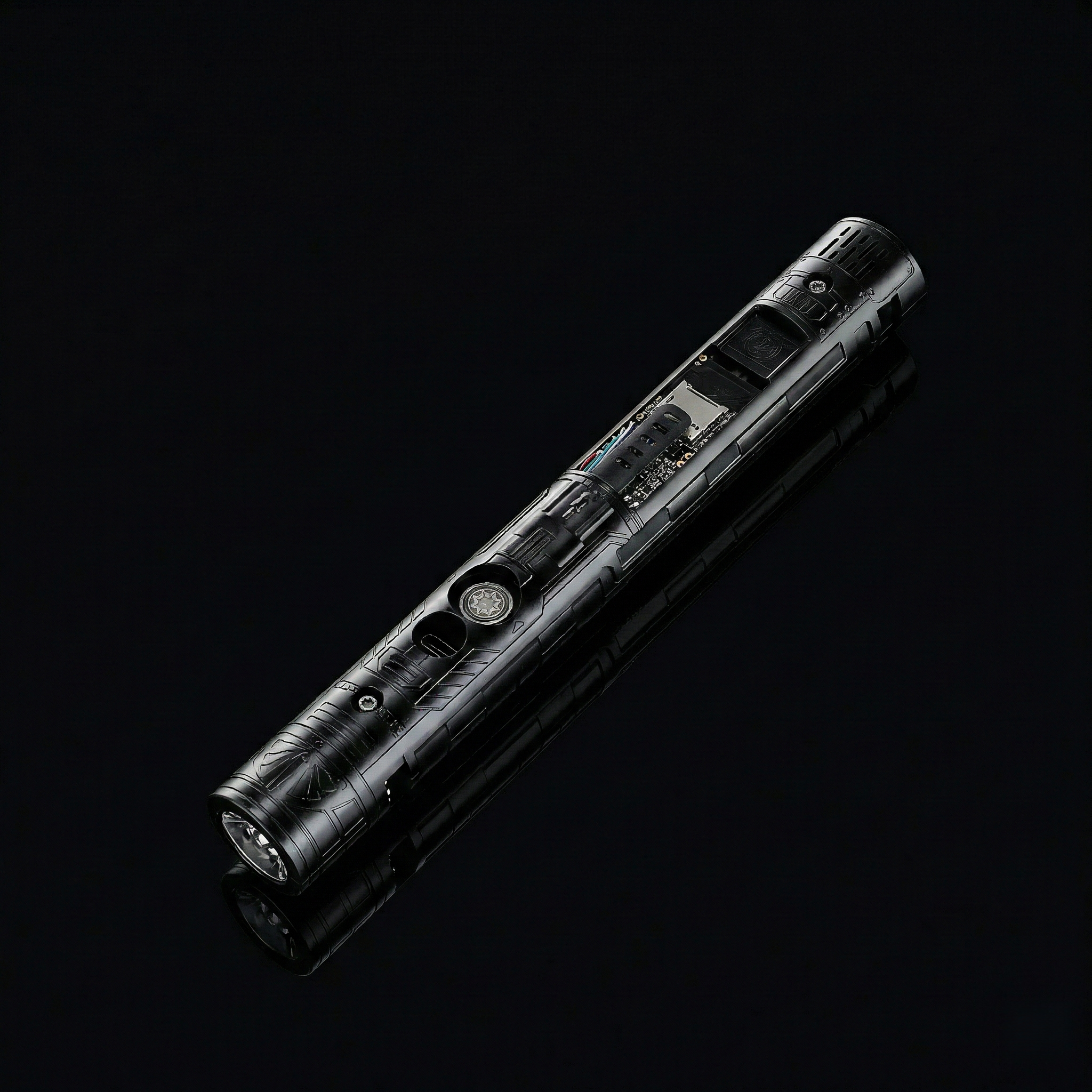
Mechanism: A high-power LED module is mounted directly on the top of the core (Hilt-side). It projects light into a hollow, diffusion-film-lined blade, similar to a flashlight.
Purpose: For lower cost. No electronics in the blade.
2. Classification by Structural Integrity
The choice between an Integrated or Split core is determined by three key factors: Hilt Geometry (e.g., Thin Necks), Aesthetic Requirements (Replica accuracy), and Assembly Strategy (Switch alignment).
Integrated Core (One-Piece / All-in-One)
Design: The battery, soundboard, switch (or tactile PCB), and emitter contact are housed in a single, continuous cylinder.
Standard Application (General Sabers):
The switch is usually a visible, illuminated button mounted directly on the core.
Pros: Highest stability, best conductivity, and easiest maintenance. Users can slide the whole core out.
Advanced Application (Replica / Curved Hilts):
Method: Uses a flat Tactile Switch PCB on the core to interact with a hidden Plunger on the hilt.
Challenge: Requires precise internal Alignment Guides to ensure the external plunger perfectly hits the internal switch during blind insertion. For curved hilts, a custom-molded curved core can be used, though this significantly increases R&D and mold costs.
Split Core (Separated / Modular)
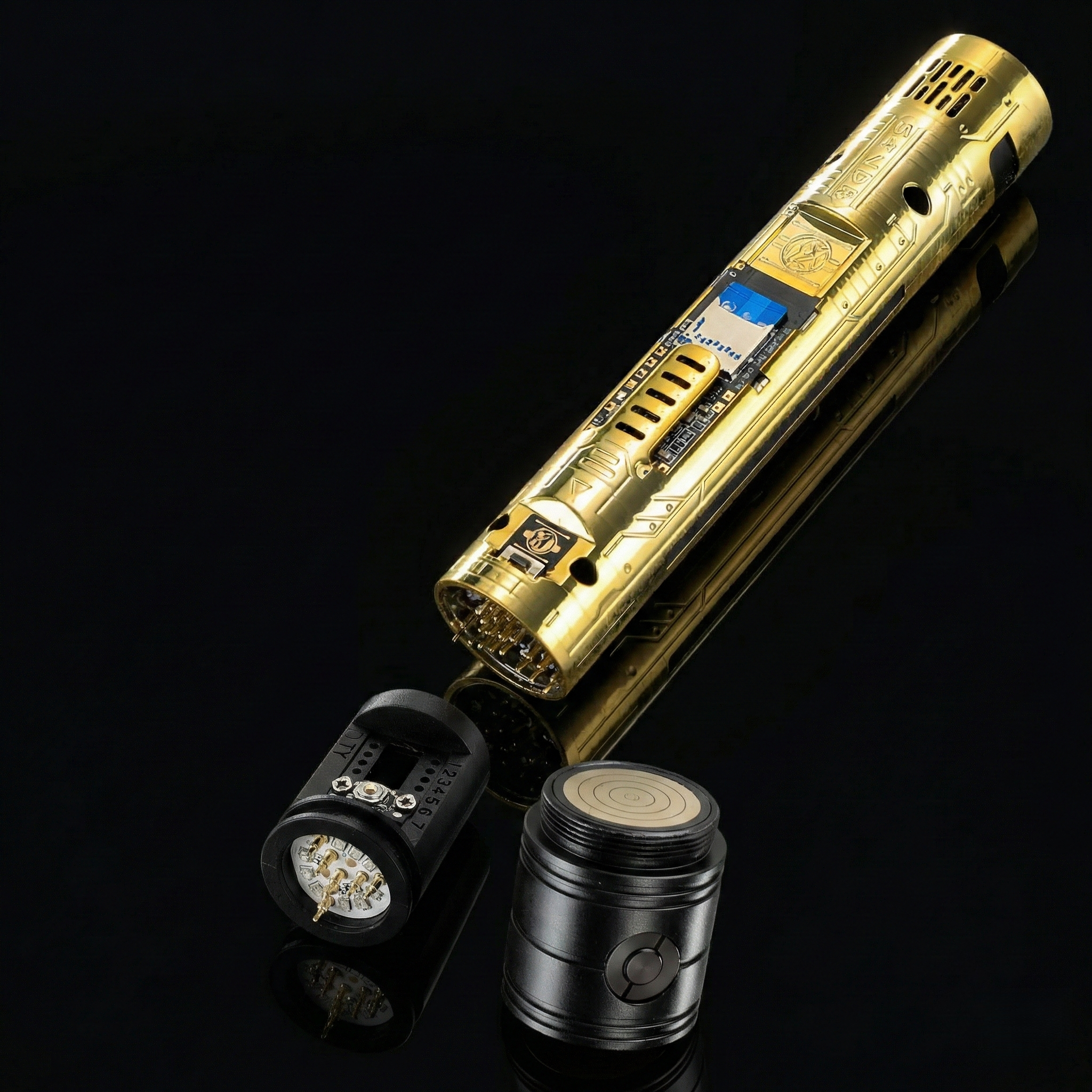
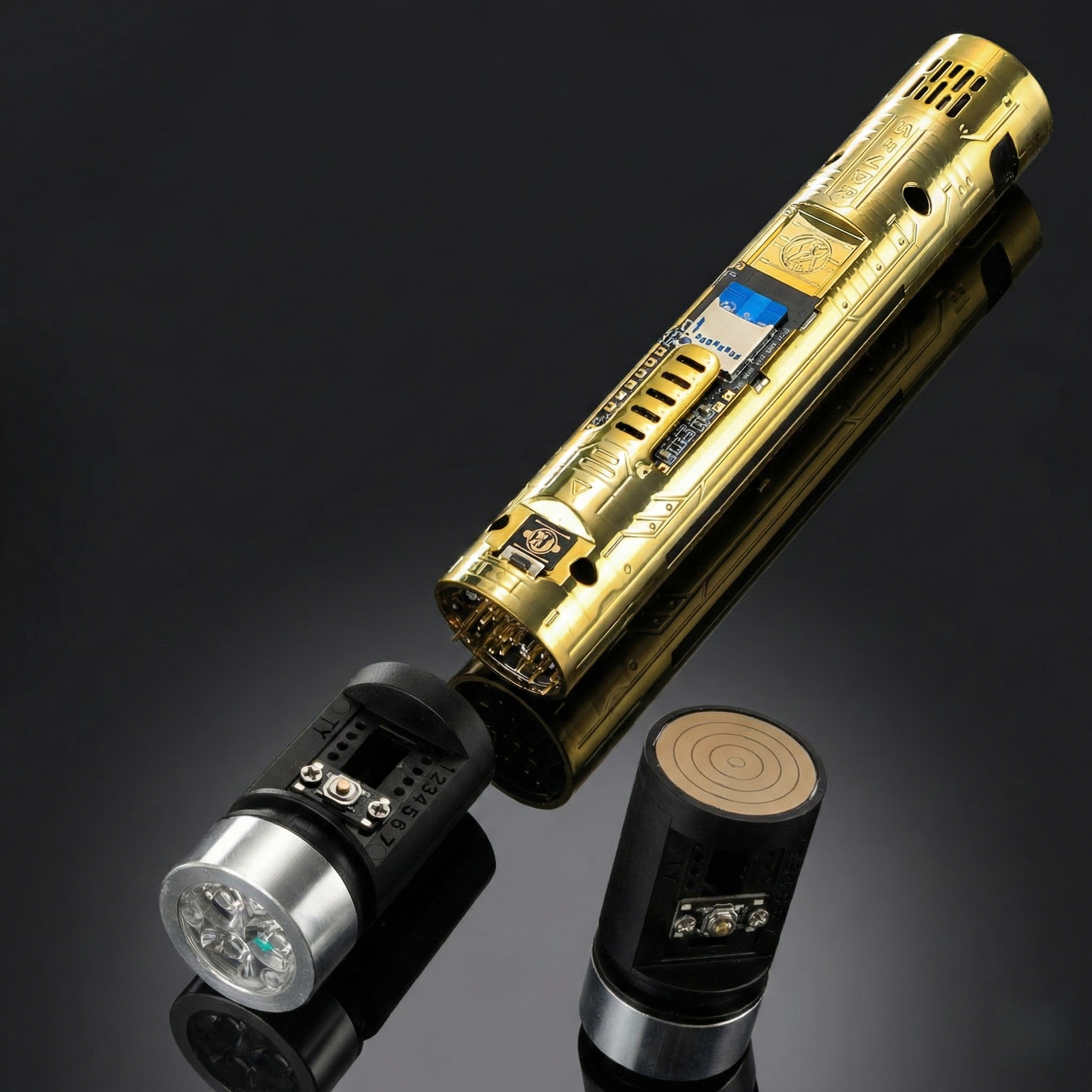
Core Logic: The chassis is physically separated into two independent sections to solve Physical Constraints or Aesthetic/Assembly issues.
Use Case 1: Physical Constriction (Thin Necks)
Used when the hilt has a narrow neck (e.g., Luke/Obi-Wan)
Use Case 2: Aesthetics & Alignment (Replicas & Curved)
Used to preserve the movie-accurate look by hiding buttons under control boxes without visible charging ports.
Benefit: The Switch Section is permanently fixed in the hilt (perfect alignment with plungers), while only the Battery/Sound Section is removable. This is also a cost-effective solution for curved hilts (e.g., Count Dooku) compared to developing a custom curved integrated core.
Connection: The sections are bridged internally using a Multi-pin Connector or flexible wires to transmit power and data.
Regardless of whether it is Pixel or Base-lit, Integrated or Split, the internal electronic components (Soundboard, Battery, Speaker, Switch) are fundamentally the same in function. Therefore, the following sections will introduce these universal components individually.