
 EN
EN

System I:Lightsaber Core Control System
This system is the "Brain" and "Nervous System" of the lightsaber, determining its intelligence, responsiveness, and stability.
1. Soundboard (The Brain)
The Microcontroller Unit (MCU) processes motion data and drives the LEDs and Speaker. The current global market is dominated by the "Big Four" boards.
Currently, the market leaders include Proffieboard,XENO Board,CFX Board,and GH Board.Global market is dominated by the "Big Four" boards. Other small-scale or clone boards are excluded from this list.
Major Players
Proffieboard: The Open-Source King. Unlimited customization but requires coding knowledge.
XENO Board (Damien Tech): The Mass Market King. Balances Proffie-level features with App-based ease of use.
CFX (Crystal Focus X): The Legacy Standard. High-end, menu-driven system from Plecter Labs.
GH (Golden Harvest): The Saber Editor. Known for its powerful on-the-fly editing capabilities.
Performance & Features
Proffieboard (Open Source Development):
Core: Runs on STM32 MCU.
Hardware Support: Supports external RGB LEDs, multiple Pixel strips, rotating Crystal Chamber motors, buttons, and accent LEDs.
Power Deficit: It has a charging port but lacks a Battery Management System (BMS). It charges the battery directly, which is less safe.
Connectivity: No native Bluetooth/WiFi. Requires soldering an extra external module to add these functions.
Capabilities: Extremely powerful. Allows custom functions and light effects via coding, and custom sound fonts via SD card.
XENO Board (Damien Tech Enterprise):
Core: Runs on ESP32 MCU (High Performance).
Hardware Support: Supports external RGB LEDs, multiple Pixel strips, rotating Crystal Chamber motors, buttons, and accent LEDs.
Power Advantage: Charging port includes a Built-in Battery Management System (BMS), supporting Fast Charging safely.
Connectivity: Native Bluetooth (WiFi in development). Supports full customization of functions and light effects via Mobile App.
Data Access: Supports custom sounds via SD card. New Feature: The latest XENO board supports Direct USB Access. You can plug the core into a phone or PC to access the board directly as a drive, without removing the SD card.
Hardware & Manufacturing
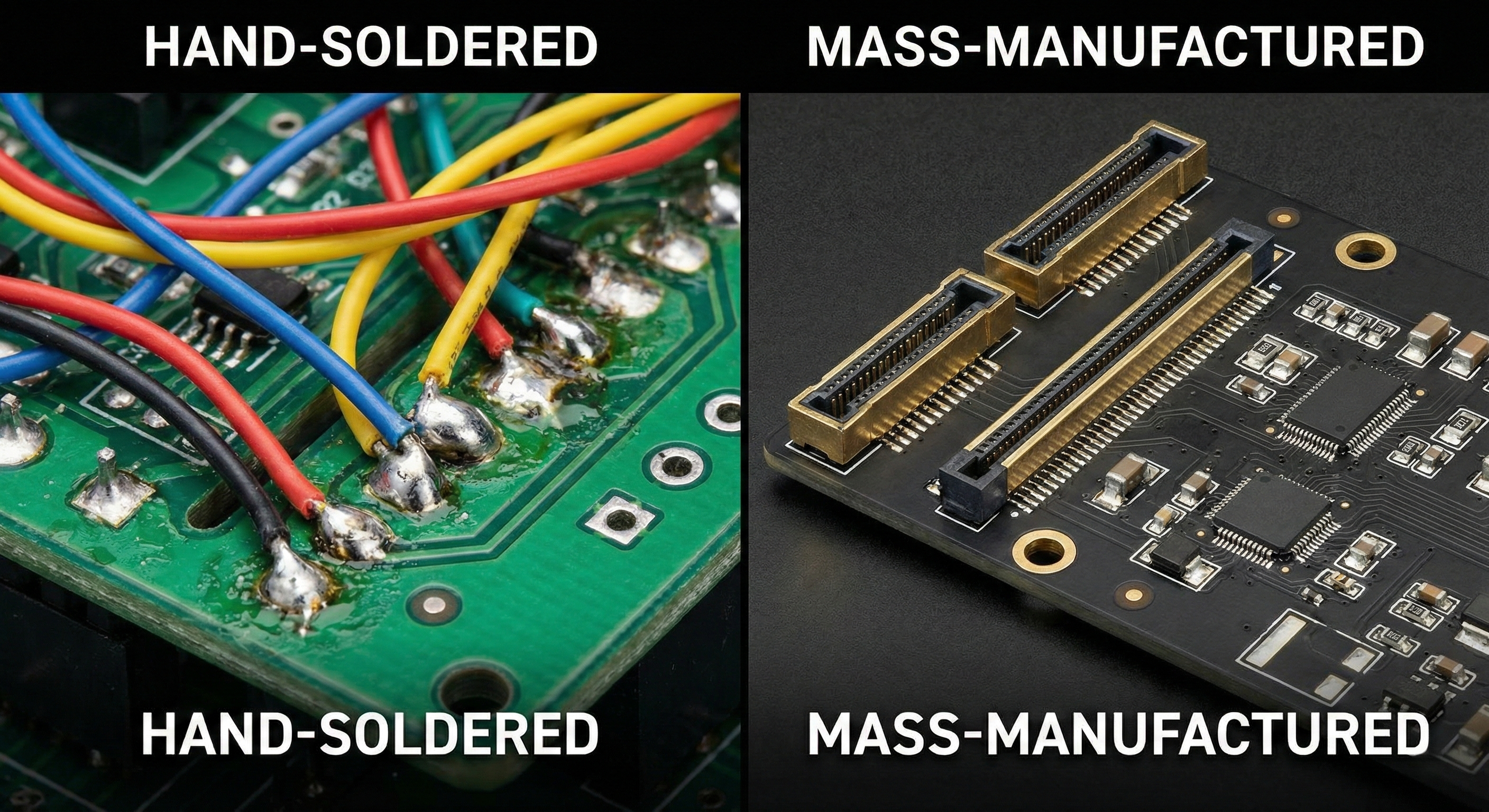
Proffie / GH / CFX (The Manufacturing Bottleneck ):
Complexity: As open-source or hobbyist boards, they are designed for software/hardware development, not mass production. Soldering and assembly are extremely tedious and difficult.
Efficiency: This leads to very low production efficiency.
Reliability Risk: The messy internal wiring makes them prone to Desoldering (Cold Joints), leading to high after-sales issues. They are ill-suited for large-scale manufacturing.
Supply Chain Volatility: The STM32 chips are produced in Western factories influenced by capital markets. Prices fluctuate wildly—STM32 chips once spiked to $100 per unit—making them incredibly expensive and risky for business.
XENO Board (The Industrial Solution):
Optimization: Optimized by Damien Tech with rational solder pad layouts specifically for mass manufacturing. Annual production value exceeds 1 million units.
Zero-Soldering Tech: The latest XENO board requires No Soldering. It uses USB-C interfaces, Quick-Plug Terminals, and professional Precision B2B Connectors. This drastically improves production efficiency.
Stability: Large-scale manufacturing allows for endless R&D iterations. XENO board has been upgraded countless times to improve stability, reducing bugs, crashes, and power failures to a minimum.
Cost Control: Chips are sourced from China, ensuring prices are extremely stable and low.
Proffie / GH / CFX: Powerful performance, loved by "Saber Enthusiasts" for code customization and small-batch collecting. However, from a custom code R&D perspective, while Proffie is powerful, the number of enthusiasts capable of coding is extremely rare.
XENO Board: Performance is equally powerful but suited for Large-Scale Enterprise Manufacturing. Operation is simple and convenient, making it perfect for the mass market of new users. In terms of global market share, XENO is dominant and perfectly suited for Business Model Operations.
2. Storage: SD Card vs. SD NAND (The Memory)
This component stores sound fonts and configuration files. There is a massive technological shift happening here.
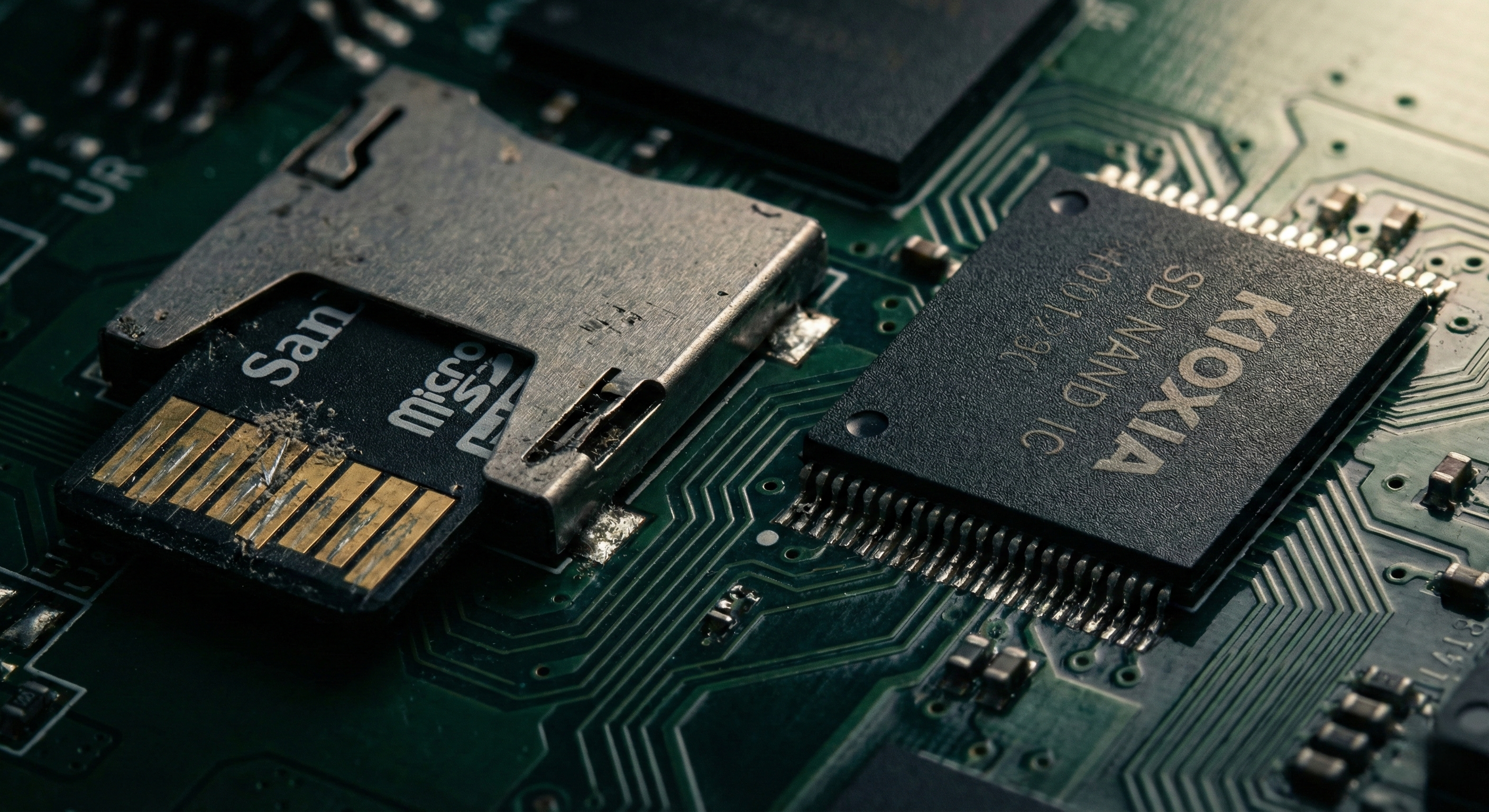
The Old Standard: TF / SD Card
The Physics of Failure: An SD card relies on mechanical contact between gold fingers and metal springs. In a lightsaber (which vibrates violently during dueling), these contacts wear out.
Oxidation: Over time, the gold fingers oxidize, increasing resistance. This leads to audio lag, stuttering, or boot failures.
The Future: SD NAND Chip
Why it's better: It is an industrial-grade storage chip soldered directly onto the soundboard.
Stability: Zero risk of contact failure due to vibration.
Analogy: Just like modern smartphones phased out SD cards for internal UFS/NVMe storage for speed and reliability, lightsabers must evolve to SD NAND.
3. Communication: Bluetooth / WiFi Modules
Wireless connectivity allows users to control the saber via Mobile App, which is the standard for modern high-end sabers.
Integrated vs. External Module
The Problem with Add-ons: Boards like Proffie require soldering an external BT module. This adds 4-6 delicate wires inside the cramped chassis.
The Manufacturing Risk: More wires = More potential break points. It significantly increases assembly time and the After-sales Defect Rate.
The Solution: Modern boards (like XENO) integrate the RF chip directly on the PCB. No extra wires, high stability.
4. Motion Sensors (6-Axis IMU)
How does the saber know you are swinging it?
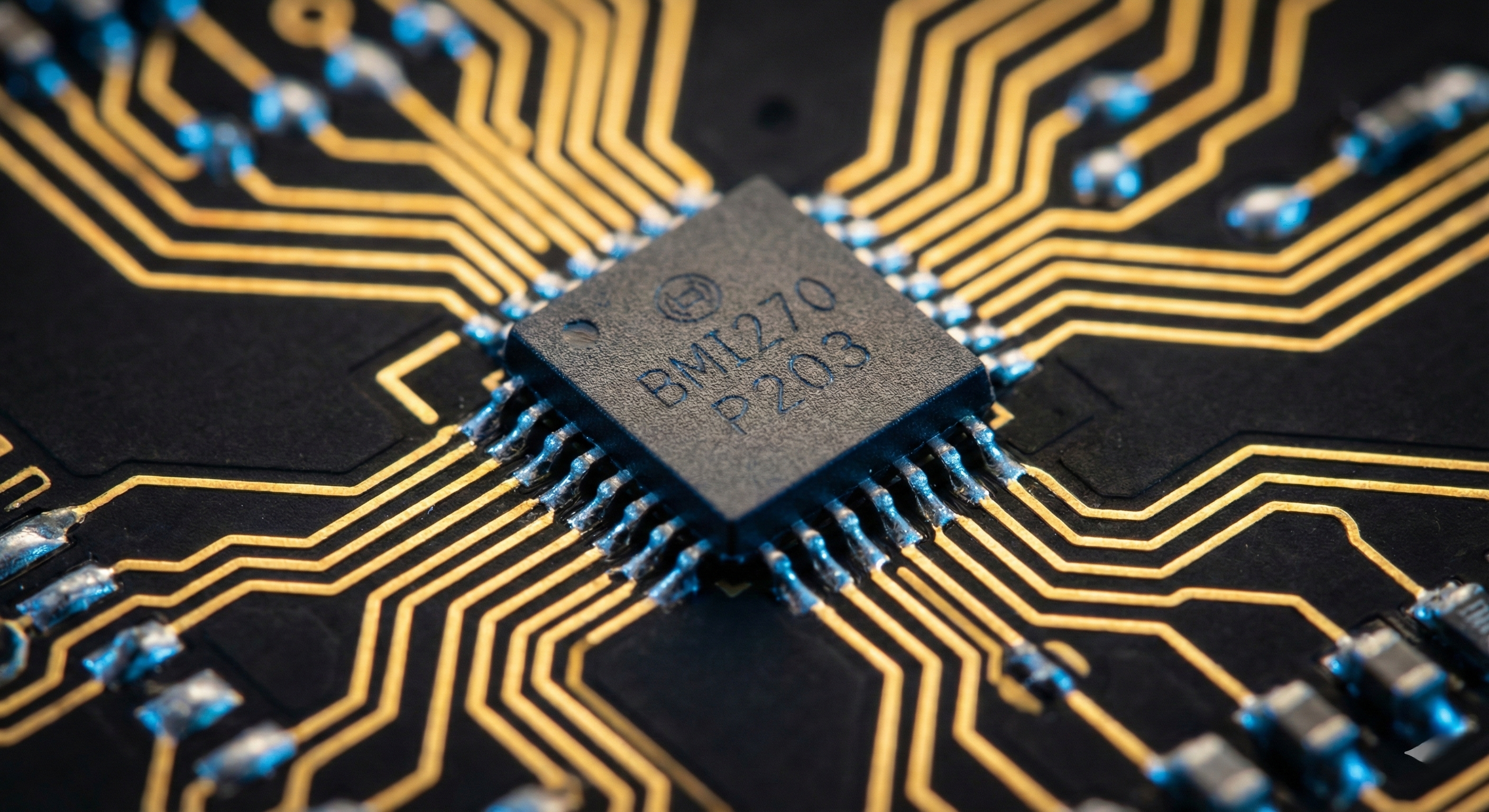
The Component: A 6-Axis Inertial Measurement Unit (IMU).
3-Axis Gyroscope: Measures rotation (Spin).
3-Axis Accelerometer: Measures force and impact (Swing/Clash).
The Function: Smooth Swing
Any board claiming "Smooth Swing" MUST have a high-sensitivity 6-axis sensor.
The sensor sends real-time data (hundreds of times per second) to the MCU, which synthesizes the hum sound pitch and volume to match the exact speed of your hand. Without this, the saber just plays a pre-recorded "whoosh" sound.